Folklore · One story, many countries
The Nine-Tailed Fox Across Asia
Also known as: 九尾狐, Jiuweihu, Kyūbi no kitsune, 九尾の狐, Gumiho (구미호), Cáo chín đuôi, Hồ ly tinh
In short
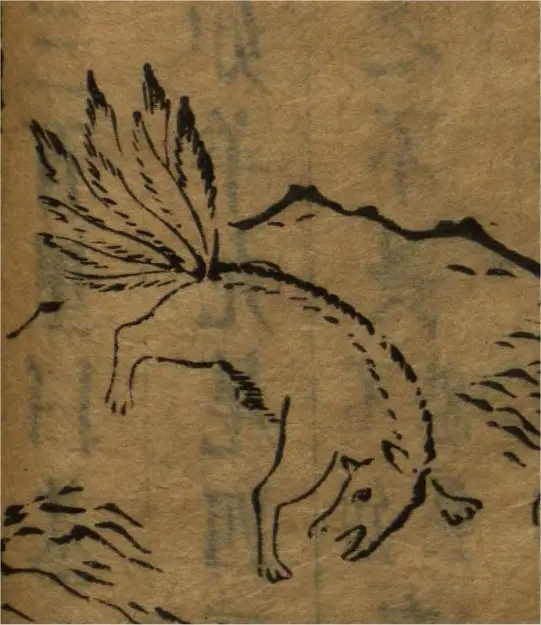
The nine-tailed fox first appears in the Chinese Shan Hai Jing, a book of mountains and strange creatures compiled between about the 4th and 1st centuries BC. In early China it was a good omen. Later it became a fox demon in the shape of a beautiful woman who ruins a king, and in that form it spread to Japan, Korea and Vietnam.
At a glance
| First record | Shan Hai Jing: a fox with nine tails on Qingqiu Mountain, with a cry like a baby's, that eats people |
|---|---|
| Where | China, Japan, Korea, Vietnam |
| Early meaning | A good omen in Han China, a sign of peace and many descendants |
| Best-known demon | Daji in the Ming novel Fengshen Yanyi; Tamamo-no-Mae in Japan |
| Local names | Jiuweihu (China), kyūbi no kitsune (Japan), gumiho (Korea), cáo chín đuôi (Vietnam) |
What is shared
- The nine tails. Every version goes back to the Shan Hai Jing fox of Qingqiu. In folk belief a fox gains tails as it grows old, and nine tails mark the oldest and most powerful.
- A woman's form. The fox takes the shape of a beautiful woman and lives among people.
- A ruler or a young man at risk. The fox attaches itself to a king, an emperor or a young scholar and drains his health, his judgement or his life.
- Unmasking. A wise man, monk, Taoist or diviner sees through the disguise and the fox shows its true form.
Versions compared Contains the ending
| Version | Place and source | What the fox is | What it does | How it ends |
|---|---|---|---|---|
| The Qingqiu fox | China, Shan Hai Jing, Classic of the Southern Mountains | A beast like a fox with nine tails and a baby's cry | Eats people | No story. Eating its flesh protects against gu poison |
| Yu the Great's white fox | China, Wu Yue Chunqiu, chapter on Wuyu of Yue | A white fox with nine tails | Appears to Yu at Tushan when he is thirty and unmarried | Yu reads it as a sign that he will be king and marries Nüjiao of Tushan |
| Daji | China, Fengshen Yanyi, Ming dynasty, published between 1567 and 1619 | A thousand-year-old fox spirit sent by the goddess Nüwa | Takes over the body of Daji, consort of the last Shang king, and leads him into cruelty | The Shang falls, and the fox spirit is caught and beheaded |
| Tamamo-no-Mae | Japan, Muromachi-period otogizōshi and the Noh play Sesshōseki | A nine-tailed fox said to have been Daji in China and a consort in India before | Becomes the favourite of a late Heian emperor, who falls ill | Unmasked by an onmyōji, killed on the plain of Nasu, turns into a poisonous stone |
| Gumiho | Korea, oral folktales, Joseon novels | A fox with nine tails that becomes a woman | Drains a man's energy with a bead it keeps in its mouth, or eats livers | A schoolboy swallows the bead; in the Fox Sister tale the fox is drowned by a magic sea |
| The fox of West Lake | Vietnam, Lĩnh Nam chích quái (about 1492), tale of the fox spirit | A nine-tailed fox spirit over a thousand years old, living in a rocky hill west of the citadel | Takes human form and carries off people | The Dragon Lord, Long Quân, sends the water armies to break its den; the hollow becomes West Lake (Hồ Tây) in Hanoi |
What differs
From good omen to demon. In the Shan Hai Jing the fox is a dangerous beast but also a source of protection, and the 4th-century commentator Guo Pu wrote that it appears in times of peace. In Han art it sits beside the goddess Xiwangmu, and the Baihutong says its nine tails stand for many descendants. Chinese sources place the change to an evil seductress after about the Song dynasty, and Fengshen Yanyi fixed the image of Daji as a fox demon.
Japan adds the stone and the shrine fox. The Tamamo-no-Mae legend borrows Daji directly and makes the fox travel from India to China to Japan. Its end in the Sesshō-seki is a Japanese addition. Japan also has Inari's messenger foxes, a sacred side of the fox that the other countries do not share in the same way.
Korea adds the bead. The Korean gumiho is almost always harmful. The fox bead held in its mouth, and the tale of the schoolboy who swallows it, are found in Korea and set the gumiho apart.
Vietnam makes it a place legend. The Vietnamese tale is about how a lake was made. The fox is killed by the Dragon Lord, Long Quân, usually identified with Lạc Long Quân of Vietnamese origin myths, and an old name of the lake, Đầm Xác Cáo (Fox Corpse Marsh), is tied to the story. Two villages near the lake, Làng Cáo (Xuân Tảo) and Làng Giàn (Cáo Đỉnh), are said to keep traces of the story; cáo means fox.
In modern culture
Nine-tailed foxes are common in East Asian games, anime and dramas. In Japan the many-tailed fox character usually draws on Tamamo-no-Mae. In Korea, dramas such as My Girlfriend Is a Gumiho (2010) and Tale of the Nine Tailed (2020) turned the gumiho into a romantic lead. In 2022 the Sesshō-seki at Nasu, the stone of the Tamamo legend, split in two, which put the legend back in the news.
Similar legends elsewhere
Same story: the plot is close. Same kind of figure: a similar being in a different story.
- Same kind of figure · JapanKitsuneJapanese fox spirits, Inari's messengers, Tamamo-no-Mae and the fox wife Kuzunoha
- Same kind of figure · KoreaGumihoThe fox bead tale and the Fox Sister
- Same story · ChinaLegend of the White SnakeAnother animal spirit in a woman's form, unmasked by a monk
- Same kind of figure · Ancient GreeceLamiaA monster in a woman's shape who preys on the young; a different animal and a different story
FAQ
Where does the nine-tailed fox come from?
From China. Its first record is the Shan Hai Jing, compiled between about the 4th and 1st centuries BC. Japan, Korea and Vietnam took the image from Chinese books.
Was the nine-tailed fox always evil?
No. In Han China it was a good omen, linked to peace, kingship and many descendants. Yu the Great took a white nine-tailed fox as a sign he would be king. The evil fox in a woman's form came later.
Is Daji a nine-tailed fox?
In Fengshen Yanyi she is a thousand-year-old fox spirit that takes over the real Daji's body. Popular retellings and the Japanese Tamamo-no-Mae legend call that fox nine-tailed. The historical Daji, consort of the last Shang king, is known only from much later records.
Is a gumiho the same as a kitsune?
They share the nine-tailed fox from China. The kitsune can also be a sacred messenger of Inari and a loving wife; the gumiho is nearly always a threat and has its own mark, the fox bead.
Sources
- 山海經 南山經 (Shan Hai Jing, Classic of the Southern Mountains), anonymous, commentary by Guo Pu, c. 4th–1st century BC
- 吳越春秋 越王無余外傳 (Wu Yue Chunqiu), Zhao Ye
- 封神演義 (Fengshen Yanyi, Investiture of the Gods), attributed to Xu Zhonglin, published 1567–1619
- Lĩnh Nam chích quái, Truyện Hồ tinh, Vũ Quỳnh and Kiều Phú, c. 1492
- 九尾狐, Chinese Wikipedia
- Nine-tailed fox, English Wikipedia
- Huli jing, English Wikipedia
- Investiture of the Gods, English Wikipedia
- 玉藻前, Japanese Wikipedia
- Tamamo-no-Mae, English Wikipedia
- 구미호, Korean Wikipedia
- 여우구슬 설화, Encyclopedia of Korean Culture (한국민족문화대백과사전)
- Hồ Tây, Vietnamese Wikipedia
- Bí ẩn hồ Dâm Đàm, Hànộimới
Folktales have many versions. This page follows the best-known version and the earliest written records. Sources checked .