Cat breed
Exotic Shorthair
In short
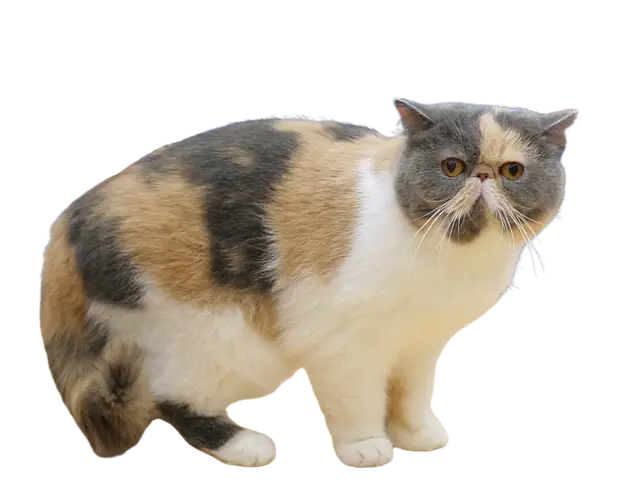
The Exotic Shorthair is a cat breed developed in the United States as a short-haired version of the Persian. It shares the Persian's medium to large, rounded build and flat-faced look, but has a short, dense coat instead of long hair.
Breed facts
| Origin | United States |
|---|---|
| Height at the withers | — |
| Weight | — |
| Life expectancy | — |
| Size group | — |
| Breed standards | CFA, FIFe, GCCF |
From Wikidata (CC0) and the FCI breed list; — means Wikidata lists no figure.
Origin and history
In the late 1950s some American Shorthair breeders secretly used the Persian as an outcross to improve body type, with crosses also made to the Russian Blue and the Burmese. American Shorthair breeders responded by changing their standard to disqualify cats showing signs of crossbreeding, and in 1966 the Cat Fanciers' Association (CFA) recognized the Persian-type shorthairs as a new breed, the Exotic Shorthair.
The CFA granted Championship status in 1967 and in 1987 closed the breed to shorthair outcrosses, leaving the Persian as the only permitted outcross. The Fédération Internationale Féline recognized the breed in 1986, and Exotics were named CFA Cat of the Year in 1991 and Best Cat in 2012.
Appearance and coat
The Exotic is a medium to large cat that closely resembles the Persian in build. It has a large, round head with full cheeks, large round eyes and small, low-set ears with rounded tips, and a relatively short tail that keeps the outline compact. The coat is short and dense and comes in all color variations.
Because Persians are used as outcrosses, some Exotics carry the recessive longhair gene, and two carriers can produce longhaired kittens. Registries treat these differently: the CFA does not count them as Persians, TICA accepts them as Persians, and the ACFA registers them as a separate Exotic Longhair breed.
Temperament
The source material gives little detail on the Exotic's personality. Breed clubs generally describe it in terms similar to the Persian, but individual cats vary, and prospective owners are best served by meeting cats and talking with breed clubs.
Care and exercise
The short, dense coat needs less upkeep than a Persian's long hair, though regular brushing is still sensible. Because the breed is flat-faced, owners are generally advised to avoid keeping the cat in hot or humid conditions and to keep it at a healthy weight.
Health
Like the Persian, the Exotic is brachycephalic, with a pushed-in face. Conditions reported in the breed include brachycephalic airway obstructive syndrome, corneal sequestrum, difficult births (dystocia) linked to large domed skulls, and polycystic kidney disease (PKD). Ultrasound screening studies have found PKD prevalence of 40 to 50% in Exotics in developed nations, and DNA screening of breeding cats is recommended.
General information, not veterinary advice.
FAQ
What is the difference between an Exotic Shorthair and a Persian?
The Exotic is essentially a Persian with a short, dense coat. Body shape, head and face are very similar; the main difference is coat length.
Can Exotic Shorthairs have long hair?
Yes. Some carry the recessive longhair gene from Persian outcrosses, and two carriers can produce longhaired kittens, which registries classify in different ways.
What health problems do Exotic Shorthairs have?
Conditions reported in the breed include brachycephalic airway problems, corneal sequestrum, dystocia and polycystic kidney disease, for which DNA screening of breeding cats is recommended.