Dog breed
Siberian Husky
In short
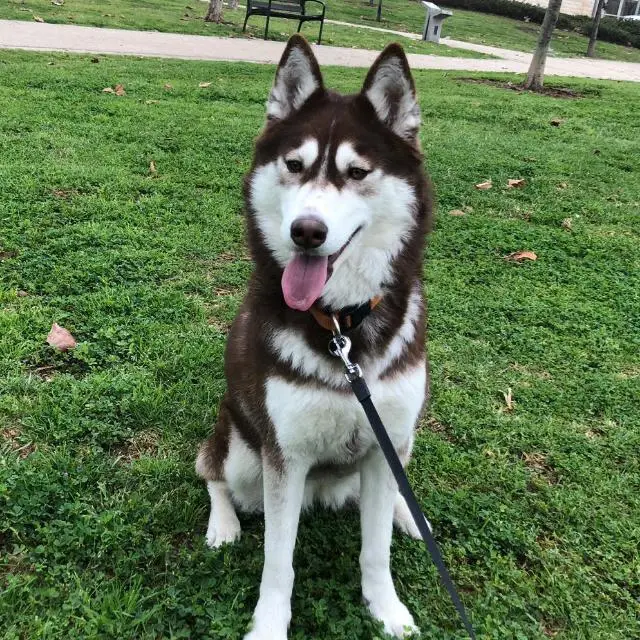
The Siberian Husky is a medium-sized working sled dog of the Spitz family, developed by the Chukchi people of the Russian Far East. It has a dense double coat, erect triangular ears and varied markings, and is described as friendly, gentle and highly energetic.
Breed facts
| Origin | Russia |
|---|---|
| Height at the withers | 51–60 cm |
| Weight | 16–28 kg |
| Life expectancy | — |
| Size group | Large |
| FCI | — (Wikidata lists no FCI standard number) |
| Breed standards | — |
From Wikidata (CC0) and the FCI breed list; — means Wikidata lists no figure.
Origin and history
The breed descends from Chukotka sled dogs, used by the Chukchi to pull sleds in harsh Arctic conditions. From the 1890s such dogs were imported to Alaska, where settlers called them Siberian Huskies, and they dominated long-distance races. The breed became famous through the 1925 serum run to Nome, in which Leonhard Seppala's lead dog Togo ran the longest leg and Balto the last. The American Kennel Club recognized the breed in 1930.
Appearance and coat
The double coat, with a dense undercoat and straight guard hairs, is thicker than in most breeds. All colors from black to pure white are allowed, often with white legs and facial masks; merle is not permitted by the AKC or the Kennel Club. Eyes may be brown or blue, or one of each. The standard asks for males of 51–61 cm and 20–27 kg, with females a little smaller.
Temperament
The breed is commonly described as friendly and gentle, and the ASPCA classifies it as good with children. Huskies tend to howl rather than bark and are known as escape artists that dig under or jump fences. They are said to need frequent company of people and other dogs.
Care and exercise
The thick coat needs weekly grooming. Exercise is described as extremely important for this high-energy working dog; owners use activities such as skijoring, bikejoring, carting, hiking and agility. A tall fence is recommended. The breed is surrendered to shelters at high rates by owners unprepared for its needs.
Health
Conditions reported in the breed include seizures, juvenile cataracts, corneal dystrophy, glaucoma, progressive retinal atrophy and congenital laryngeal paralysis. Hip dysplasia is uncommon. A 2024 UK study found a life expectancy of 11.9 years.
General information, not veterinary advice.
FAQ
How big does a Siberian Husky get?
Siberian Huskies typically stand about 51–60 cm and weigh about 16–28 kg, with females smaller than males.
Are Siberian Huskies good with children?
The ASPCA classifies the breed as good with children, though it notes high energy and special exercise needs.
Do Siberian Huskies shed?
Yes. The thick double coat sheds its undercoat and needs weekly grooming.
How long do Siberian Huskies live?
A 2024 UK study found a life expectancy of 11.9 years for the breed.