Nostalgia · Gadgets · Chinese childhood memory
What is a fuduji (复读机)?
Also called: fùdújī, language repeater, cassette repeater, BBK repeater
In short
A fuduji, literally "repeat-reading machine", is a portable cassette player with a memory chip that can capture one sentence from a tape and replay it again and again, so you can practise listening and repeating without rewinding. It was invented in China and patented in 1991, and from the late 1990s brands such as BBK (步步高) made it a standard piece of kit for students learning English. Point-and-read pens, learning tablets and phone apps later took over, though the product category still exists.
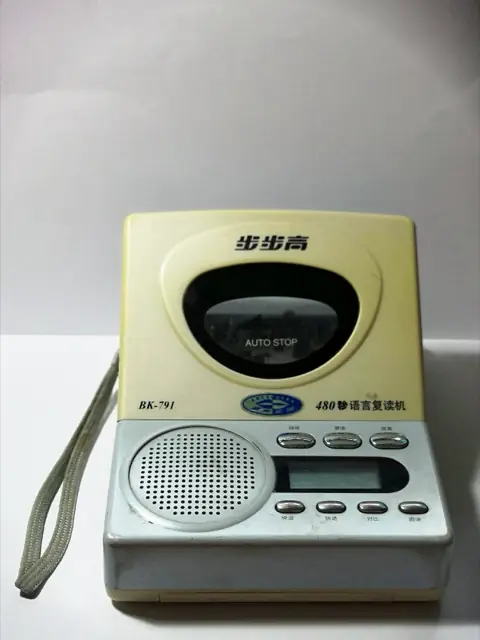
Where it came from
The inventor was Zhong Daolong, a People's Liberation Army major general and telecoms engineer who taught himself English from the age of 45. Rewinding tapes over and over to catch one sentence was slow and wore out the tape, so he added a processing chip and memory chip to a portable cassette recorder.
He filed a patent for an "electronic language learning machine" on 29 July 1991. Manufacturers copied it and called it a fuduji, and in 1994 he and two co-designers gave up the patent so anyone could make one free of charge.
When it was everywhere
| Year | What happened |
|---|---|
| 1991 | Patent filed for the "electronic language learning machine" |
| 1994 | The inventors give up the patent |
| 1998 | BBK enters the market and sales take off |
| 2002 | About 13 million sold that year by one report; brands hire celebrities, BBK signs Stephen Chow |
| 2017 | A Xinhua bookstore in Chongqing still reports selling over a hundred a month |
What using one was like
- Press the repeat button and the last sentence of the English tape plays on a loop until you press it again.
- Record yourself reading the line, then play the original and your version back to back to compare pronunciation.
- Every textbook came with its own cassettes, and listening homework meant working through them on the repeater.
- Officially for English; in practice plenty of students used it to play pop tapes too.
What happened to it
Textbook audio moved from cassettes to CDs and online files, and study gadgets moved on to point-and-read pens, learning tablets and apps. BBK and other former repeater makers shifted to those newer education devices.
Repeaters as a category have not vanished: the electronic-dictionary brand Wenquxing still lists repeater models on its official site, though not necessarily cassette ones. We could not find a reliable count of how many cassette repeaters are still being made.
The word lives on as Chinese internet slang: calling someone a fuduji means they just repeat what others say, and group chats where everyone posts the same line are full of "repeaters".
FAQ
Who invented the fuduji?
It is credited to Zhong Daolong, who filed the patent in 1991 and gave it up for free public use in 1994.
How is it different from a normal tape recorder?
A tape recorder needs rewinding to hear a line again; a fuduji stores the line in a chip and loops it, and can record your own reading for comparison.
What does fuduji mean as slang?
Someone who repeats other people's words without thinking, or a chat where everyone posts the same message.
Does it bring back memories?
Did you ever use one?
Anonymous: no IP addresses are stored, and one network can add only a limited number of answers to a page each day.