Cat breed
Ragdoll
In short
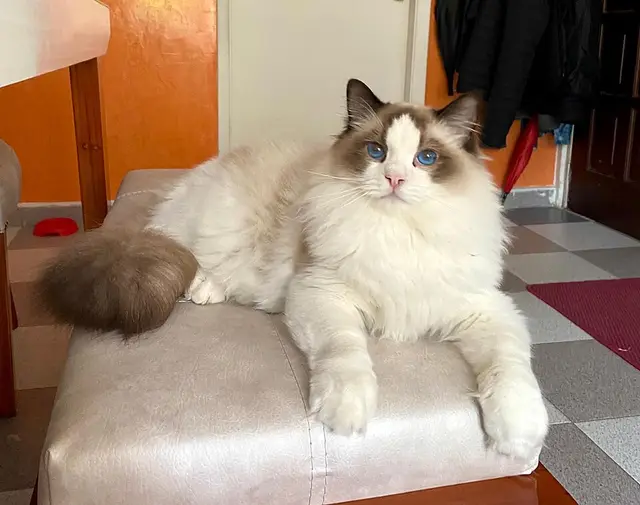
The Ragdoll is a large cat breed developed in California in the 1960s by breeder Ann Baker. It has a semi-long, silky colourpoint coat and large blue eyes. Its name comes from its tendency to go limp and relaxed when picked up, and it is best known for a docile, affectionate nature.
Breed facts
| Origin | United States |
|---|---|
| Height at the withers | — |
| Weight | — |
| Life expectancy | — |
| Size group | — |
| Breed standards | CFA, FIFe, GCCF, ACFA, ACF, NZCF |
From Wikidata (CC0) and the FCI breed list; — means Wikidata lists no figure.
Origin and history
The breed began in Riverside, California, with Josephine, a non-pedigreed white longhaired cat whose later kittens showed a placid temperament. All Ragdolls descend from Baker's cats. Baker trademarked the name and set up her own registry, the IRCA, around 1971. In 1975 a group led by Denny and Laura Dayton broke away and developed the standard now accepted by registries such as the CFA and FIFe. The breed is particularly popular in the UK and the US.
Appearance and coat
The Ragdoll is one of the largest domestic breeds: females weigh about 3.6 to 6.8 kg and males 5.4 to 9.1 kg or more, and it can take up to four years to mature. The silky, medium-long coat lacks a dense undercoat. Colours are seal, chocolate, red, blue, lilac and cream, in colourpoint, mitted and bicolour patterns, with lynx and tortie variants. Kittens are born white and colour up over time.
Temperament
Breed publicity describes the Ragdoll as affectionate, intelligent, relaxed, gentle and an easy-to-handle lap cat. Often called dog-like, many follow their owners from room to room, can learn to retrieve toys and stay playful into old age. The idea that Ragdolls are pain resistant is a myth.
Care and exercise
Its long coat usually needs brushing at least twice a week, and shedding may increase in spring. The CFA notes that the lack of a dense undercoat reduces matting.
Health
A 2025 UK study of over 21,000 Ragdolls found a median age at death of 12.85 years, comparable to non-pedigree cats. Conditions reported in the breed include hypertrophic cardiomyopathy linked to the R820W mutation, for which genetic testing is widespread, and urate bladder stones.
General information, not veterinary advice.
FAQ
How big do Ragdoll cats get?
Females weigh about 3.6 to 6.8 kg and males about 5.4 to 9.1 kg or more; full size can take up to four years.
Do Ragdolls shed?
They lack a dense undercoat, which the CFA says reduces shedding and matting, but shedding may increase in spring.
How long do Ragdoll cats live?
A 2025 UK study found a median age at death of 12.85 years.