Cat breed
British Shorthair
In short
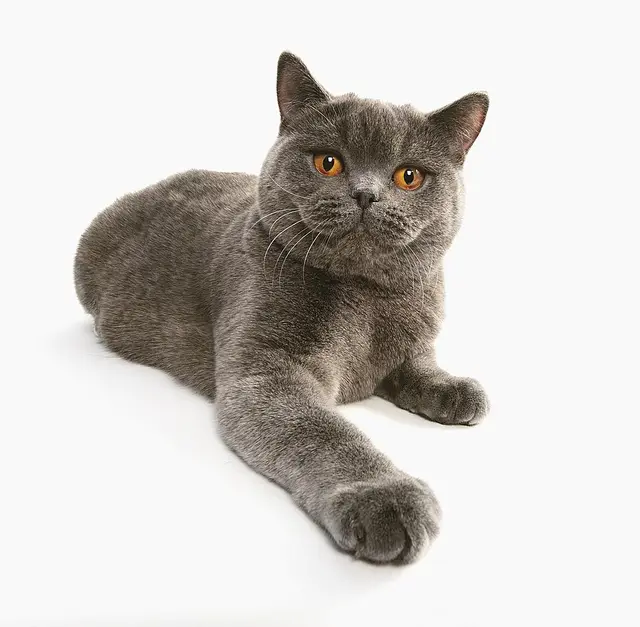
The British Shorthair is the pedigree form of Britain's native domestic cat, with a stocky body, thick coat and broad face. Its best-known colour is the British Blue, with a grey-blue coat and copper eyes. It typically weighs about 4 to 7 kg and is known for a relatively calm temperament.
Breed facts
| Origin | United Kingdom |
|---|---|
| Height at the withers | — |
| Weight | 4–7 kg |
| Life expectancy | 14 years |
| Size group | Medium |
| Breed standards | CFA, FIFe, GCCF, WCF, ACFA, ACF |
From Wikidata (CC0) and the FCI breed list; — means Wikidata lists no figure.
Origin and history
Housecats appear to have reached Britain before the Roman invasion and developed into large, robust cats with short, thick coats. Selective breeding began in the 19th century, and the breed appeared at the first cat show, held by Harrison Weir at the Crystal Palace in 1871. After falling out of favour, breeders crossed in Persians, Russian Blues, Burmese and Chartreux, and by the late 1970s the breed had full recognition from major registries. About half of GCCF kitten registrations are British Shorthairs.
Appearance and coat
It is a powerful cat with a broad chest, thick-set legs, round paws and a large, round head with full cheeks and small, widely set ears. The coat is very dense, straight and plush with a crisp pile. Besides blue, it comes in many colours and patterns, including tabby, colourpoint and bicolour. Males are noticeably larger than females, and full development takes around three years. A longhaired variant is called the British Longhair.
Temperament
The breed is described as relatively calm, which has made it a frequent media star; it is said to have inspired John Tenniel's Cheshire Cat illustration. Individual cats vary.
Care and exercise
Sources give little specific detail on care. Its short, dense coat is generally thought to benefit from occasional brushing, and regular play helps keep any cat active.
Health
A UK study found a life expectancy of 9.58 years, while Swedish insurance data put the median above 12.5 years. Conditions reported in the breed include hypertrophic cardiomyopathy, which one Danish study found in 20.4% of males, and the breed is thought to be at high risk of polycystic kidney disease.
General information, not veterinary advice.
FAQ
How big does a British Shorthair get?
It typically weighs about 4 to 7 kg, with males noticeably larger than females.
What colours do British Shorthairs come in?
Blue is the best known, but the breed comes in many colours, including white, black, red and cream, in solid, tabby, colourpoint and bicolour patterns.
How long do British Shorthairs live?
Studies vary: a UK study found 9.58 years, while Swedish insurance data put the median above 12.5 years.