Cat breed
Persian cat
In short
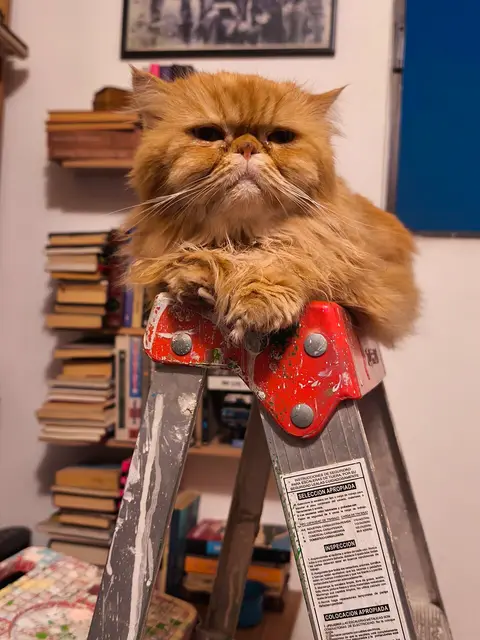
The Persian, or Persian Longhair, is a long-haired cat breed descended from cats exported from Iran and Afghanistan to Europe, and one of the most popular pedigree breeds. It has a round head, short cobby body and very long, thick coat, typically weighs about 3.5 to 7 kg, and is generally described as quiet and placid.
Breed facts
| Origin | Iran |
|---|---|
| Height at the withers | — |
| Weight | 3.5–7 kg |
| Life expectancy | — |
| Size group | Medium |
| Breed standards | CFA, FIFe, GCCF, WCF, ACFA, ACF |
From Wikidata (CC0) and the FCI breed list; — means Wikidata lists no figure.
Origin and history
Long-haired cats may have reached Italy from Khorasan around 1620, but there is stronger evidence of longhairs exported from Afghanistan and Iran in the 19th century, when they were marketed in Europe as Persian cats. Genetic research shows the modern Persian is closest to Western European breeds such as the British Shorthair. A Persian appeared at the first organized cat show, at the Crystal Palace in London in 1871, and Harrison Weir issued the first standard in 1889. From the late 1950s breeders, especially in North America, developed an increasingly flat face; the older type is now called the Traditional or doll-face Persian. The Himalayan and Exotic Shorthair are treated as Persian variants by some registries.
Appearance and coat
The standard calls for a rounded head with large, wide-spaced round eyes, a short, cobby body with short, well-boned legs and a broad chest, so that everything about the ideal Persian is round. Show-style cats have an extremely long, thick coat and a very short muzzle. Almost every coat color and pattern is allowed, from solids and silvers to tabbies, bicolors and Himalayan points, and eye colors range from blue and copper to green and hazel.
Temperament
The Persian is generally described as a quiet, placid cat that adapts well to apartment life. In one study of owners' perceptions, Persians scored higher than non-pedigree cats on affection toward owners, friendliness to strangers, cleanliness and predictability.
Care and exercise
Persians cannot keep their long, dense fur clean themselves, so they need frequent brushing to prevent matting. Their eyes may also need regular cleaning to prevent crusting and tear staining. The breed is reported to be sensitive to heat.
Health
The flat face of the modern type is linked to breathing difficulties, eye and skin problems, dental issues and difficult births. Conditions reported in the breed include polycystic kidney disease, which affects nearly half of Persians in some countries, hypertrophic cardiomyopathy, progressive retinal atrophy, entropion, hip dysplasia and idiopathic facial dermatitis. A 2024 UK study found a life expectancy of 10.93 years, while a 2015 study in England found an average of 14.1.
General information, not veterinary advice.
FAQ
How long do Persian cats live?
Figures vary by study: a 2015 study in England found an average lifespan of 14.1 years, while a 2024 UK study found a life expectancy of 10.93 years.
Do Persian cats need a lot of grooming?
Yes. Their long, dense coat needs frequent brushing to prevent matting, and their eyes may need regular cleaning.
What is a Traditional or doll-face Persian?
It is the original Persian type with a more pronounced muzzle, as opposed to the flat-faced modern show type.