Cat breed
Havana Brown
In short
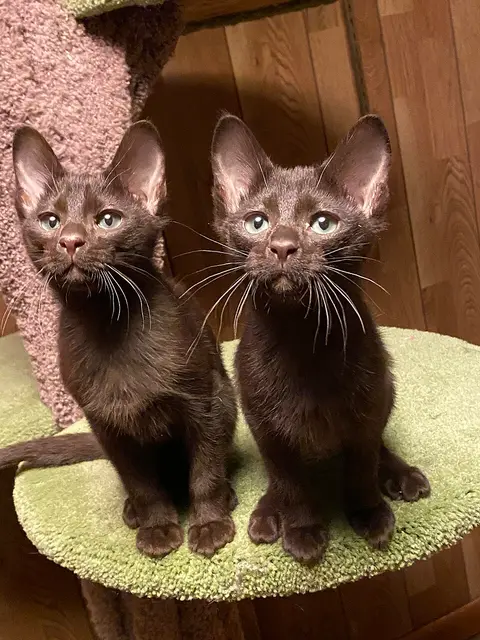
The Havana Brown is a pedigreed cat breed created by British fanciers in the 1950s from chocolate-carrying Siamese and black domestic shorthairs. It is a moderately sized, muscular cat with a short, solid warm-brown coat and green eyes, and is described as intelligent, curious and very attached to its family.
Breed facts
| Origin | United Kingdom |
|---|---|
| Height at the withers | — |
| Weight | — |
| Life expectancy | — |
| Size group | — |
| Breed standards | — |
From Wikidata (CC0) and the FCI breed list; — means Wikidata lists no figure.
Origin and history
In the early 1950s a group of British breeders, later known as the Chestnut Brown Group, bred a Siamese carrying the chocolate gene to a black cat also carrying it, producing chestnut kittens. The name likely refers to the color of Havana cigars or the Havana rabbit. In the UK the line kept Siamese conformation and developed into the Oriental Shorthair.
Kittens exported to the US were bred for moderate type and self-brown offspring, and the CFA granted championship status in 1964. The name is now used for two types, an Oriental type and the moderate USA type. A related British breed, the Suffolk, was recognized by the GCCF in 2014. The USA type is considered endangered, with only 15 catteries registered worldwide as of 2024.
Appearance and coat
The Havana Brown is a well-balanced, moderately sized, muscular shorthair with no extreme features. The head is slightly longer than wide, never wedge-shaped, with a distinct stop in profile, and the ears are moderately large. Males are larger than females.
The coat must be a warm, usually reddish brown with no obvious tabby markings once adult, with brown whiskers, green eyes and pink or rose paw pads.
Temperament
As commonly described, the Havana Brown is intelligent and curious and often uses its paws to explore and communicate. It tends to greet visitors, may ride on owners' shoulders and is known for playing with and grooming human hair. It is described as very attached to its family, often bonding with the family dog, and not thriving when left alone for long periods.
Care and exercise
Very little grooming is needed; a gentle brushing and wipe with a damp cloth once or twice a week is described as sufficient. It is a moderately active breed that needs company and involvement in daily life, and neutered cats can tend to become chubby.
Health
There are no known genetic diseases associated with the breed. Conditions reported in the breed include a slightly higher occurrence of gingivitis, attributed to its Siamese ancestry.
General information, not veterinary advice.
FAQ
Why is it called a Havana Brown?
The name most likely refers to its coat color, which resembles Havana cigars, though some link it to the Havana rabbit.
Can Havana Browns be left alone?
They are described as very attached to their families and do not thrive when left alone for long periods.
Is the Havana Brown rare?
Yes. The USA-type Havana Brown is considered endangered, with only 15 catteries registered worldwide as of 2024.