Cat breed
Ocicat
In short
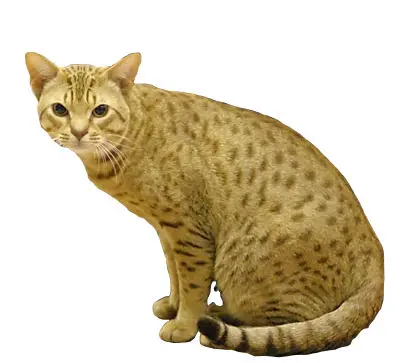
The Ocicat is an all-domestic cat breed from the United States, created from Siamese and Abyssinian crosses with later American Shorthair input. It is a medium to large, athletic cat with a spotted tabby coat that resembles the ocelot, and its temperament is often described as dog-like.
Breed facts
| Origin | United States |
|---|---|
| Height at the withers | — |
| Weight | — |
| Life expectancy | — |
| Size group | — |
| Breed standards | CFA, FIFe, ACFA |
From Wikidata (CC0) and the FCI breed list; — means Wikidata lists no figure.
Origin and history
The breed began in 1964 when Virginia Daly of Berkley, Michigan, crossed an Abyssinian with a Siamese. A second-generation kitten named Tonga had cinnamon spots on an ivory background; Daly's daughter thought he looked like an ocelot, giving the breed its name. Geneticist Clyde Keeler encouraged Daly to pursue the spotted look, and later breeding added the American Shorthair for body structure and silver coloring.
The CFA registered the breed in 1966 and granted championship status in 1987. TICA recognized it in 1986 and FIFe in 1992, and the GCCF granted championship status in 2006. The mackerel-tabby Aztec, recognized separately by the GCCF in 2013, was merged back as the Ocicat Classic in 2024.
Appearance and coat
The Ocicat is a medium to large, well-muscled and lithe cat weighing about 2.5 to 6.5 kg. It has a broad muzzle, ears set at about 45 degrees, large almond-shaped eyes in any color except blue, medium to long legs and a long, slim tail with a dark tip.
Only spotted tabby markings are allowed, with a tabby 'M' on the forehead, mascara-like marks around the eyes and spots over the body. Twelve colors are recognized: black (tawny), blue, chocolate, lilac, cinnamon and fawn, each with a silver version.
Temperament
The Ocicat's temperament is often described as that of a 'dog in a cat's body'. Many can reportedly be trained to fetch, walk on a harness and leash, come when called and perform other dog-style tricks.
Care and exercise
Sources give little specific care advice. A trainable, active breed is likely to benefit from regular play and mental stimulation, and the short coat needs little grooming.
Health
Conditions reported in the breed include urate urolithiasis; one US review of over 5,000 cases found an odds ratio of 16.8 for the Ocicat. A Swedish study of veterinary and insurance data found it had the third highest incidence of pyometra, six times the rate for all cats.
General information, not veterinary advice.
FAQ
Does the Ocicat have wild cat DNA?
No. Despite its wild look and ocelot-inspired name, it was created entirely from domestic breeds: Siamese, Abyssinian and American Shorthair.
How big does an Ocicat get?
It is a medium to large cat; adults weigh about 2.5 to 6.5 kg.
Can Ocicats be trained?
They are often described as dog-like, and many can reportedly be trained to fetch, walk on a leash and come when called.