Cat breed
Ojos Azules
In short
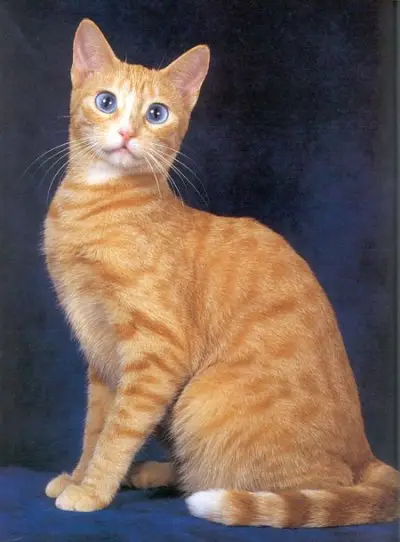
The Ojos Azules, Spanish for 'Blue Eyes', was a rare shorthaired cat breed that originated in New Mexico, USA, in the 1980s. It was a medium-sized cat whose deep blue eyes came from a dominant mutation not linked to coat color, but breeding stopped because of lethal side effects and the breed is now considered extinct.
Breed facts
| Origin | United States |
|---|---|
| Height at the withers | — |
| Weight | — |
| Life expectancy | — |
| Size group | — |
| Breed standards | — |
From Wikidata (CC0) and the FCI breed list; — means Wikidata lists no figure.
Origin and history
In the 1980s, cats with dark blue eyes were found among feral cats in New Mexico. The first, a tortoiseshell named Cornflower, was discovered in 1984; bred to males without the trait, she passed it to all her kittens, showing it was dominant. The breed was named Ojos Azules, and only descendants of Cornflower carrying the gene were called by that name.
The breed was always rare, with only ten cats known in 1992. TICA accepted it for registration in 1991, but after the gene was linked to cranial defects, breeders stopped working with it and TICA returned it to registration-only status in 2014. No breeding programs are now known.
Appearance and coat
The Ojos Azules was medium-sized, with large, round blue eyes, an arched neck, a somewhat triangular head, a slightly rounded forehead and an angular muzzle. The coat was short, fine, soft and shiny, and a semi-longhaired variety also existed.
All colors were allowed, but only particolors, colorpoints and intermediate colors with a white tail tip were permitted; white markings on the extremities were common. Because the gene is not tied to coat color, it allowed dark-coated cats with blue eyes, and a flattened white tail tip was a common sign of the gene.
Temperament
The available sources say nothing about the breed's temperament, and with so few cats ever recorded, no reliable description exists.
Care and exercise
As the breed is considered extinct, there is no current care guidance. Sources give no specific information on exercise or grooming.
Health
Genetic research found the gene to be lethal when inherited from both parents, causing cranial deformities, white fur, a small curled tail and stillbirth. Light sensitivity and pupil problems were observed in cats with one copy, and solid white blue-eyed individuals were susceptible to deafness. These problems led breeders to abandon the breed.
General information, not veterinary advice.
FAQ
Is the Ojos Azules cat extinct?
Yes. Breeders stopped working with the blue-eye mutation because of lethal side effects, and the breed is officially considered extinct.
What does Ojos Azules mean?
It is Spanish for 'Blue Eyes', referring to the breed's deep blue eyes.
Are there other blue-eyed breeds like the Ojos Azules?
Other dominant blue-eye genes found in Kazakhstan and Russia are the basis of developing breeds such as the Altai, Topaz and Celestial, but these are not Ojos Azules.