Cat breed
Russian Blue
In short
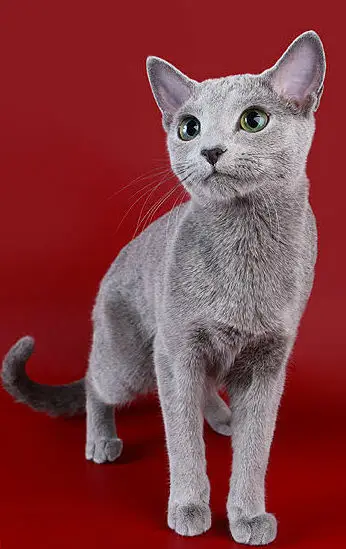
The Russian Blue is a pedigreed short-haired cat breed descended from a natural landrace thought to come from the port of Arkhangelsk in Russia. It is a small to moderate cat of about 3.6 to 6.8 kg with a plush, silver-tipped blue-grey double coat and green eyes, and is commonly described as quiet, intelligent and playful.
Breed facts
| Origin | Russia |
|---|---|
| Height at the withers | — |
| Weight | — |
| Life expectancy | — |
| Size group | — |
| Breed standards | CFA, FIFe, GCCF, ACFA, ACF |
From Wikidata (CC0) and the FCI breed list; — means Wikidata lists no figure.
Origin and history
Sailors are believed to have taken the cats from the Archangel Isles to Britain and Northern Europe in the 1860s, and an Archangel Cat was shown at the Crystal Palace in 1872. The breed got its own show class in 1912 and was developed mainly in the UK and Scandinavia until World War II. Low numbers after the war led to crosses with Siamese, whose traits have since largely been bred out, and US breeders combined Scandinavian and British lines to create the modern American type. Russian Blues have also been used in developing the Havana Brown and Nebelung.
Appearance and coat
The Russian Blue has vivid emerald green eyes, pinkish lavender to mauve paw pads and a dense, short double coat of solid pale blue-grey. The undercoat is soft and as long as the guard hairs, whose silver tips create the breed's shimmering sheen. The tail may show faint tabby stripes. Adults weigh about 3.6 to 6.8 kg, with males typically larger. Some registries also accept Russian White and Black, but the CFA, FIFe, TICA and WCF recognize only blue.
Temperament
Russian Blues are commonly described as quiet, reserved with strangers, loving and easygoing, but disliking change and preferring routine. They are said to be highly intelligent, with good memories, and many have learned tricks. They are also described as keen hunters.
Care and exercise
Kittens are described as energetic and in need of playmates or toys, since boredom can make them mischievous. The breed is athletic, leaping and climbing well, and slow to mature, keeping adolescent traits until about three to four years old, so ongoing play suits it.
Health
The source material names no breed-specific health conditions. Breed clubs recommend health screening of breeding stock and regular veterinary check-ups.
General information, not veterinary advice.
FAQ
How big does a Russian Blue get?
Russian Blues are small to moderate cats, typically weighing about 3.6 to 6.8 kg when grown, with males usually larger than females.
Are Russian Blues quiet?
They are generally described as a quiet breed and reserved with strangers, though individuals vary.
Is a Russian Blue the same as a British Blue?
No. A British Blue is a blue British Shorthair, and the Chartreux and Korat are other separate blue breeds.