Cat breed
Sphynx cat
In short
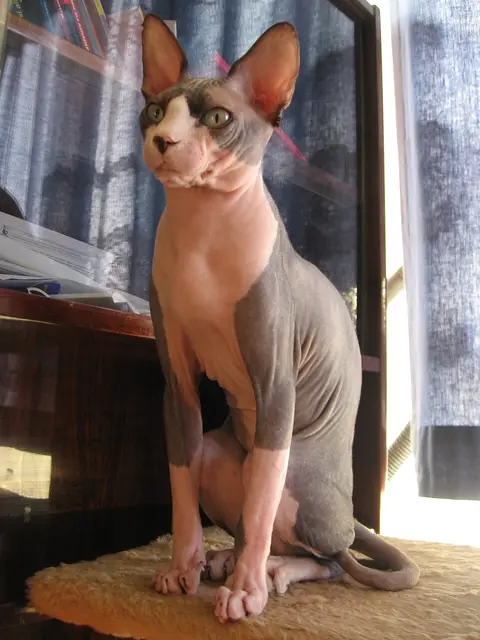
The Sphynx, also called the Canadian Sphynx, is a cat breed known for its lack of fur, developed from natural hairless mutations from the 1960s onward. Its skin feels like chamois leather and shows the colours and markings a coat would have. It is commonly described as extroverted, energetic and very affectionate.
Breed facts
From Wikidata (CC0) and the FCI breed list; — means Wikidata lists no figure.
Origin and history
The breed began in Toronto in 1966, when a hairless kitten named Prune was born to a domestic shorthair. Today's North American and European Sphynx descend mainly from two later lines: Dermis and Epidermis, barn cats from Wadena, Minnesota, in the mid-1970s, and Bambi, Punkie and Paloma, strays found in Toronto in 1978. Breeders established that hairlessness is recessive.
Appearance and coat
The skin may be completely hairless or carry fine down, and whiskers may be whole, broken or absent. TICA's standard calls for a wedge-shaped head with prominent cheekbones, large lemon-shaped eyes, very large ears, a barrel chest with a rounded belly, thick paw pads and a whiplike tail. Hairlessness stems mainly from a mutation in the KRT71 gene. Lacking fur, the Sphynx loses heat easily and feels warm to the touch.
Temperament
Sphynx are known for extroverted behaviour, with high energy, intelligence, curiosity and affection for their owners. Often called dog-like, many greet owners at the door and are friendly with strangers. They tend to demand a lot of attention and cuddle for warmth.
Care and exercise
Sources advise limiting long sun exposure, which can cause sunburn, and not letting the cat outdoors unattended in the cold; some owners use coats in winter. Oily skin secretions, extra earwax and debris in nails and skin folds call for regular cleaning. The breed is not necessarily hypoallergenic.
Health
Conditions reported in the breed include hypertrophic cardiomyopathy and mitral valve dysplasia; one 2012 study of 114 cats found 34% had an abnormal heart. Other reported issues include skin damage from sun exposure, urate bladder stones, congenital myasthenic syndrome and respiratory infections in young kittens.
General information, not veterinary advice.
FAQ
Are Sphynx cats hypoallergenic?
Not necessarily. Cat allergies are triggered by a protein found in saliva and skin glands, not hair, so allergic people may still react.
Are Sphynx cats completely hairless?
Some are, but many have fine down on the skin, and some have hair on the nose, tail or toes.
Do Sphynx cats need baths?
Their skin produces greasy secretions and they make extra earwax, so regular cleaning of the skin, ears, nails and skin folds is needed.