Cat breed
Turkish Van
In short
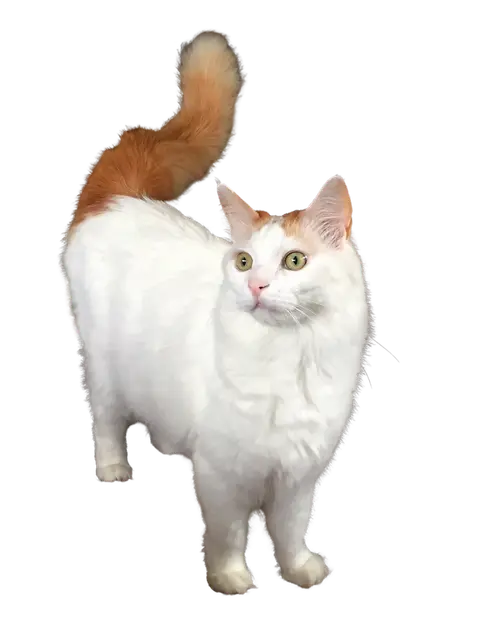
The Turkish Van is a rare, semi-long-haired cat breed developed in the United Kingdom in the 1950s from cats obtained in Turkey. It is one of the larger breeds, with males weighing about 5 to 9 kg, and it is defined by the Van pattern: a white cat with color mainly on the head and tail.
Breed facts
| Origin | Türkiye |
|---|---|
| Height at the withers | — |
| Weight | — |
| Life expectancy | — |
| Size group | — |
| Breed standards | CFA, FIFe, GCCF, ACF |
From Wikidata (CC0) and the FCI breed list; — means Wikidata lists no figure.
Origin and history
In 1955 British photographers Laura Lushington and Sonia Halliday were given two unrelated cats in Turkey, from Iskenderun and Istanbul. Their kittens bred true, and Lushington set out to standardize the breed, adding two more cats in 1959. Despite the name, none of the foundation cats came from the Lake Van area, and the breed is distinct from the solid white Van cat of Turkey. The GCCF granted full status in 1969 as the Turkish cat, renamed Turkish Van in 1979. TICA granted championship status in 1985 and the CFA in 1994.
Appearance and coat
The Turkish Van is a large, muscular cat with broad shoulders, a short neck and a moderately long body and tail. Males weigh about 5 to 9 kg and females about 3 to 5 kg, and the breed takes three to five years to mature. The semi-long coat has no evident undercoat, feels like cashmere and is unusually water repellent. It is thick in winter and shorter in summer, while the brush tail stays full. Color, usually red, cream, black or blue, sometimes with tabby or tortie, is limited to the head and tail. Eyes are blue, copper-orange or odd.
Temperament
The TICA standard describes the breed as highly intelligent, energetic and playful, sometimes mischievous, and fond of climbing and perching high. Vans are said to be affectionate and to follow their owners around, but not usually to be lap cats or to like being picked up. A 2021 Finnish study found higher than average fearfulness and lower sociability in the Vans studied. A fascination with water is often claimed but disputed.
Care and exercise
Vans are described as strong jumpers and climbers that are easily trained with positive reinforcement to fetch or walk on a leash. The coat sheds continuously and seasonally.
Health
Van-patterned cats are reported not to be prone to deafness. Solid white cats of Turkish Van stock may carry the white gene associated with deafness, especially those with two blue eyes, and some registries require hearing tests for them. Breed clubs recommend health screening of breeding stock.
General information, not veterinary advice.
FAQ
How big does a Turkish Van get?
It is one of the larger breeds: males weigh about 5 to 9 kg and females about 3 to 5 kg, and full maturity takes three to five years.
Do Turkish Vans like water?
The breed is often said to be fascinated by water, though some pet writers think it likes water no more than other cats.
Are Turkish Vans lap cats?
They are described as affectionate and keen to be near their owners, but not usually lap cats, and many dislike being picked up.