Nostalgia · Early internet · Remembered worldwide
What was dial-up internet?
Also called: dial-up modem, 56k modem, dial-up sound, AOL dial-up
In short
Dial-up was the way most homes got online in the 1990s: a modem in the computer phoned an internet provider's number over the ordinary phone line and turned data into sound and back. It was slow, topping out at a nominal 56 kbit/s, and while you were online nobody in the house could use the phone. Broadband replaced it from the late 1990s onward, and AOL ended its dial-up service on September 30, 2025, though a small number of people still use dial-up elsewhere.
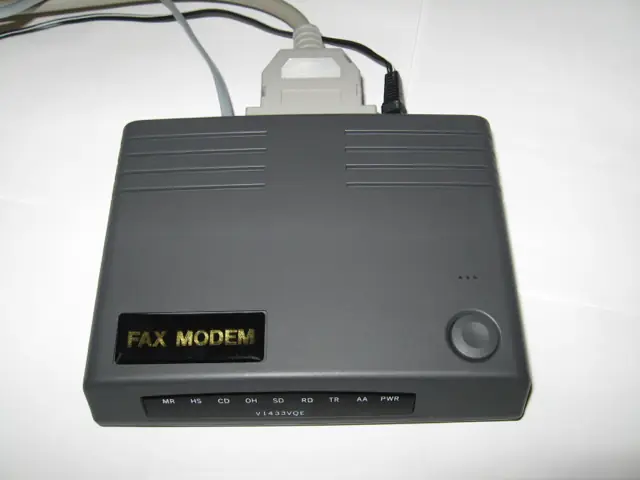
How it worked, and that sound
To go online you clicked Connect and the modem dialed a phone number, much like a normal call. When the provider's modem answered, the two machines "handshaked": they tested the line and agreed on a speed, using the same audio band as a voice call. That negotiation is the hiss, beeps and screeching people remember, and most modems played it through a small speaker.
Speeds went up over the decade, from 14.4 to 28.8 and 33.6 kbit/s, and then to "56k" modems. Real connections were usually slower, around 40 to 50 kbit/s on a good line. A single song could take many minutes to download, and web pages filled in one image at a time.
Getting online in the 1990s
Because the computer was using the phone line, a call coming in or someone picking up another phone could knock you offline, and anyone calling your house got a busy signal. "Get off the internet, I need the phone" was a common household argument. Households that could afford it added a second phone line for the computer.
AOL made dial-up mainstream with mass free-trial mailings, first on floppy disks and then on CDs that turned up in mailboxes and magazines, were handed out by video stores and banks, and were even packed with frozen steaks. Its marketing chief later said that at one point half of the CDs produced worldwide carried an AOL logo; PC World estimated AOL sent out more than a billion discs over the campaign. You installed the software, the modem dialed in, and a voice said "You've got mail."
What happened to it
Cable, DSL and later fiber, wireless and satellite broadband became widely available from the late 1990s. They were many times faster, always on and did not tie up the phone. Pew Research found 10% of US adults still used dial-up in 2008 and 3% in 2013. AOL, which once had tens of millions of dial-up members, shut its dial-up service on September 30, 2025, after 34 years. Dial-up is still technically possible where phone lines and providers remain, mostly as a last resort in rural areas, but it is rare.
Things people remember
- Being knocked offline because someone picked up the phone
- Stacks of AOL CDs offering free hours, later used as coasters
- Waiting for images to load line by line
- Hearing the modem fail and redial when the line was busy
FAQ
Why did dial-up make that noise?
The modems were negotiating the connection over a phone line, testing it and agreeing on a speed using audio tones.
Does dial-up internet still exist?
Barely. AOL ended its dial-up service on September 30, 2025, and only a small number of people, mostly in rural areas, still rely on dial-up from other providers.
How fast was dial-up?
The fastest common modems were called 56k, meaning up to 56 kilobits per second, but real speeds were usually about 40–50 kbit/s, hundreds or thousands of times slower than broadband today.
Does it bring back memories?
Did you ever use it?
Anonymous: no IP addresses are stored, and one network can add only a limited number of answers to a page each day.