Nostalgia · Gadgets · Remembered worldwide
What was VHS?
Also called: Video Home System, VCR, videotape, video cassette
In short
VHS (Video Home System) is the videotape format JVC introduced in Japan in September 1976, played and recorded on a VCR (video cassette recorder) connected to the TV. It beat Sony's Betamax and was the standard for recording TV and renting films through the 1980s and 1990s, until DVD overtook it in the early 2000s. The last major studio film on VHS came out in 2006, and Funai, the last VCR maker, stopped production in July 2016.
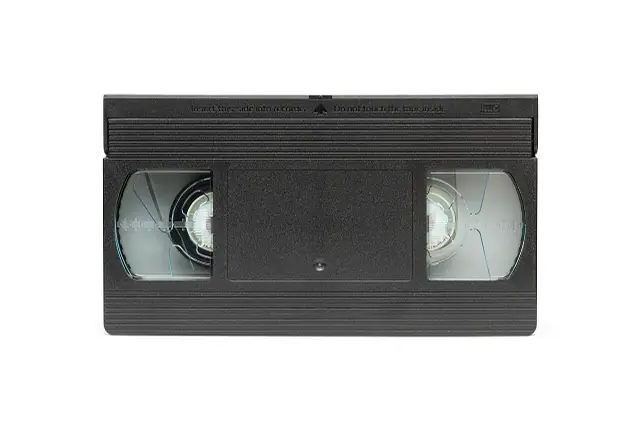
What it was like
A VHS tape is a black plastic cassette about 19 by 10 cm and 2.5 cm thick, holding half-inch magnetic tape. A standard T-120 tape held two hours at normal speed, or six hours at the slowest speed on American machines, at a big cost in picture quality. You pushed it into the front of a top-loading or front-loading VCR, and the machine could play rented films or record TV, including on a timer while you were out.
Tapes wore out with use, and old rentals often had fuzzy lines and wobbly sound.
Timeline
| Year | What happened |
|---|---|
| 1975 | Sony launches the rival Betamax format in Japan |
| 1976 | JVC introduces VHS on September 9; the first VHS VCR, the Victor HR-3300, goes on sale in Tokyo on October 31 |
| 1977 | The first VHS VCR in the US, RCA's VBT200, goes on sale on August 23 |
| 1980 | VHS has about 60% of the North American market |
| 1997 | DVD launches in the US in March |
| 2003 | DVD rentals overtake VHS rentals in the US in June |
| 2006 | A History of Violence becomes the last major studio film released on VHS in North America |
| 2008 | The last big shipment of pre-recorded tapes goes to US stores; JVC makes its last VHS-only machine |
| 2016 | Funai, the last VCR maker, ends production in July |
Why VHS beat Betamax
Betamax had a smaller cassette and arguably a better picture, but at first it recorded only an hour, not enough for a film. VHS offered two hours, a simpler tape mechanism and faster rewinding. JVC also licensed the format widely, which kept machines cheap, and its parent Matsushita put its marketing weight behind it.
What happened to it
DVD offered sharper pictures, menus and no rewinding, and by the mid-2000s studios had stopped releasing films on tape. VCR sales shrank year after year. Funai, which made machines in China, said in July 2016 that it would stop because it could no longer get parts; it had made about 15 million VCRs in 2000 but only about 750,000 in 2015.
You can no longer buy a new VCR from any major maker, so working machines come from the second-hand market. Tapes have become a collector's niche, and a few limited VHS editions have been released for fans in recent years. The Last Blockbuster in Bend, Oregon, still rents out VHS tapes.
Things people remember
- "Be Kind, Rewind" stickers on rental tapes; the phrase was so common it became the title of a 2008 Michel Gondry film
- Setting the VCR timer to tape a show you would miss
- Taping over a family recording by mistake
- Adjusting the tracking to get rid of lines across the picture
FAQ
When was the last VCR made?
Funai Electric, the last company making VCRs, ended production in July 2016.
What was the last movie released on VHS?
Among major studio releases in the US and Canada, A History of Violence (2006) is usually given as the last, apart from later promotional and collector editions.
What does VHS stand for?
Video Home System. JVC developed it as a format for recording and playing video at home on a VCR.
Does it bring back memories?
Did you ever use one?
Anonymous: no IP addresses are stored, and one network can add only a limited number of answers to a page each day.