Cat breed
Abyssinian cat
In short
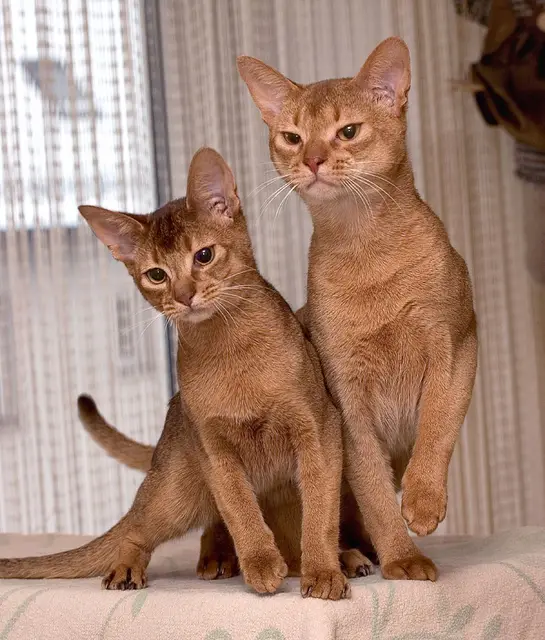
The Abyssinian, or Aby, is one of the oldest established cat breeds, developed in the United Kingdom and named after Abyssinia (Ethiopia), though genetic studies point to Southeast Asian and European roots. It is a lithe, muscular, medium to large cat with a short ticked coat and large ears, usually described as social, active and playful.
Breed facts
| Origin | Egypt, Ethiopia, and United Kingdom |
|---|---|
| Height at the withers | — |
| Weight | 3.5 kg |
| Life expectancy | — |
| Size group | Small |
| Breed standards | FIFe, GCCF, ACF |
From Wikidata (CC0) and the FCI breed list; — means Wikidata lists no figure.
Origin and history
The first Abyssinians shown in England were said to come from Abyssinia, including a cat named Zula brought back in 1868, though many breeders dispute Zula's status. A taxidermy specimen bought around 1834 to 1836, held in Leiden, is thought to be the earliest known example. The breed was developed in the UK from at least the 1890s and recognized by the GCCF in 1929. It was nearly lost in Britain after World War II and an outbreak of feline leukemia virus, and was rebuilt with imported cats. Genetic markers suggest both Asian and European cats contributed to it.
Appearance and coat
The Abyssinian is lithe, fine-boned and muscular, standing roughly 20 to 25 cm tall, with long legs, small oval paws and a long tapering tail. The head is a moderate wedge with large, alert, pointed ears and almond-shaped gold, green, hazel or copper eyes. The short, fine, close-lying coat is ticked: each hair has three or four bands of color. Colors include ruddy (usual), cinnamon or sorrel, blue, fawn, chocolate, lilac and silver, though recognition varies by registry. Kittens are born dark and lighten over several months.
Temperament
Abyssinians are commonly described as highly social and attention-seeking, doing well in multi-cat homes. They are said not to be lap cats but to be constantly exploring or playing, earning the nickname Clowns of the Cat Kingdom, and to make soft chirruping sounds rather than a typical meow. One veterinarian described a dog-like attachment to their owners.
Care and exercise
Because the breed is described as always in motion, opportunities for play and exploration suit it. Sources give little specific grooming detail for the short coat.
Health
Conditions reported in the breed include familial renal amyloidosis, progressive retinal atrophy (the Abyssinian is the breed most commonly affected), pyruvate kinase deficiency, patellar luxation, feline infectious peritonitis, feline atopic dermatitis, psychogenic alopecia, aortic thromboembolism and acquired myasthenia gravis. Breed clubs recommend health screening of breeding stock.
General information, not veterinary advice.
FAQ
Are Abyssinian cats lap cats?
Generally not. They are commonly described as constantly exploring or playing, though very social and attached to their owners.
Where do Abyssinian cats come from?
The breed was developed in the United Kingdom and named after Abyssinia (Ethiopia), but genetic studies indicate cats from both Southeast Asia and Europe went into it.
What is a ticked coat?
In a ticked coat each hair has a light base and several darker bands of color, giving the Abyssinian its even, finely flecked look.