Dog breed · FCI 8
Portuguese Water Dog
In short
The Portuguese Water Dog is a medium-sized working water dog from the Algarve region of Portugal, where it herded fish into nets and carried messages between boats. It stands roughly 43 to 57 cm tall and weighs about 16 to 25 kg, and is generally described as intelligent, trainable and closely attached to its people.
Breed facts
| Origin | Portugal |
|---|---|
| Height at the withers | 43–57 cm |
| Weight | 16–25 kg |
| Life expectancy | — |
| Size group | Medium |
| FCI | Group 8: Retrievers, Flushing dogs, Water dogs · standard no. 37 |
| Breed standards | FCI |
From Wikidata (CC0) and the FCI breed list; — means Wikidata lists no figure.
Origin and history
The breed originated in the Algarve and spread along the Portuguese coast, where fishermen used it to herd fish into nets, retrieve lost tackle and act as a courier between ships or from ship to shore. It is related to the Spanish Water Dog and is thought to share ancestry with the Standard Poodle.
By the 1930s the breed was close to extinction. Shipping magnate Vasco Bensaude began a breeding program to re-establish it, and about half of today's pedigreed dogs trace back to his stud dog Leão. The Portuguese Water Dog Club of America was formed in 1972, and the breed later gained attention as the choice of US President Barack Obama.
Appearance and coat
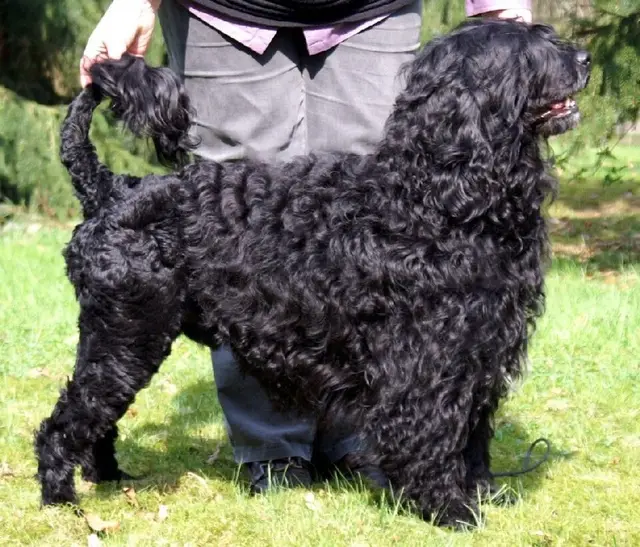
The Portuguese Water Dog is solidly built and muscular, slightly longer than tall, with webbed toes that help in swimming. Its single-layered coat comes in two types: compact curls or gentle waves. Common colours are black, brown, black and white, or brown and white. The coat is usually kept in a lion cut, with the hindquarters and muzzle shaved, or an even retriever cut.
Temperament
As commonly described, the breed is loving, independent and intelligent, receptive to training and generally friendly to strangers. Dogs often bond strongly with one family member and prefer to stay near their people. They are described as having a strong retrieving instinct, which can show up as chewing or tugging, and are suited to service roles such as hearing and therapy dogs.
Care and exercise
Sources say the breed needs regular intensive exercise and mental challenges, and that boredom can lead to destructive behaviour; it is not a dog to be left alone for long periods. The coat keeps growing, so it is typically brushed every other day and trimmed about every two months.
Health
Because the gene pool is limited, breeders study pedigrees closely. Conditions reported in the breed include hip dysplasia, cataracts, progressive retinal atrophy, distichiasis, GM1 storage disease and juvenile dilated cardiomyopathy. DNA tests exist for several of these, and GM1 storage disease has been almost entirely eliminated through carrier testing.
General information, not veterinary advice.
FAQ
Do Portuguese Water Dogs shed?
Their single-layered coat is described as non-shedding, though there is no scientific evidence that any dog breed is truly hypoallergenic. The coat needs frequent brushing and regular trimming.
How big does a Portuguese Water Dog get?
Typical height is about 43 to 57 cm at the withers and weight about 16 to 25 kg, with males larger than females.
Is the Portuguese Water Dog recognised by the FCI?
Yes. The FCI lists it as breed number 37 in Group 8, with Portugal as the country of origin.