Dog breed · FCI 3
Border Terrier
In short
The Border Terrier is a small, rough-coated British terrier from the area of the Anglo-Scottish border, traditionally used to bolt foxes for the Border Hunt. It typically weighs about 5 to 7 kg and is built with long enough legs to follow horses and a body narrow enough to enter burrows.
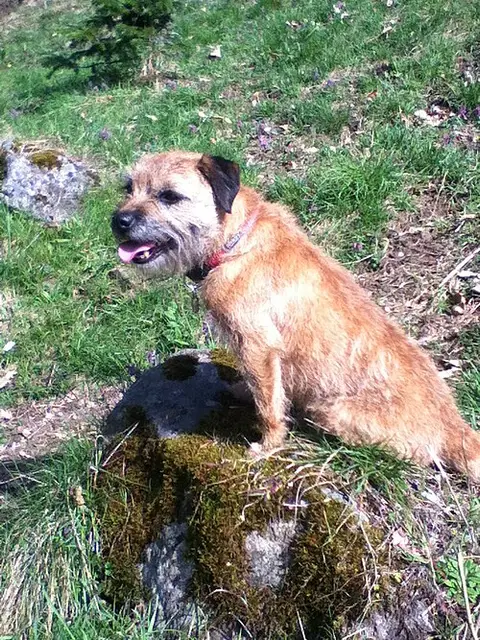
Breed facts
| Origin | United Kingdom |
|---|---|
| Height at the withers | — |
| Weight | 5.2–7 kg |
| Life expectancy | — |
| Size group | Small |
| FCI | Group 3: Terriers · standard no. 10 |
| Breed standards | FCI, The Kennel Club (UK) |
From Wikidata (CC0) and the FCI breed list; — means Wikidata lists no figure.
Origin and history
The breed developed along the Anglo-Scottish border and shares ancestry with the Dandie Dinmont and Bedlington Terriers. It was once known as the Coquetdale or Redesdale Terrier, but by the late 1800s was called the Border Terrier, probably because of its long association with the Border Hunt in Northumberland. Its job was to bolt foxes that had gone to ground, and it was also used on rodents, otters and badgers.
The Kennel Club recognised the breed in 1920, the year The Border Terrier Club was formed, and the American Kennel Club followed in 1930. It has been among the more popular breeds in the United Kingdom, ranking eighth in Kennel Club registrations in 2008.
Appearance and coat
Border Terriers have a broad skull, a moderately short muzzle, strong teeth and V-shaped ears that drop towards the cheeks. The tail is moderately short and tapering. The double coat combines a short, dense undercoat with a harsh, wiry, close-lying outer coat. Common colours are grizzle-and-tan, blue-and-tan, red and wheaten.
Temperament
The source text says little about temperament. As a working terrier bred to run with hounds and go to ground after foxes, the breed is generally associated with stamina and a strong hunting drive; breed clubs and the breed standard give fuller descriptions.
Care and exercise
Sources give little detail on care. A breed developed to keep pace with horses and hounds is generally expected to need regular exercise, and the wiry coat is designed to resist weather and dirt.
Health
One 2024 UK study found a life expectancy of 14.2 years, compared with 12.7 for purebreds overall. Conditions reported in the breed include canine epileptoid cramping syndrome, gall bladder mucocele and other gall bladder disease, and neutrophilic cholangitis, for which a UK study found the breed predisposed.
General information, not veterinary advice.
FAQ
How long do Border Terriers live?
One 2024 UK study found a life expectancy of 14.2 years, above the average for purebred dogs.
How big does a Border Terrier get?
It is a small terrier, typically weighing about 5 to 7 kg, with males slightly larger than females.
Is the Border Terrier recognised by the FCI?
Yes. The FCI lists it as breed number 10 in Group 3, the terriers, with Great Britain as the country of origin.