Dog breed · FCI 3
Jack Russell Terrier
In short
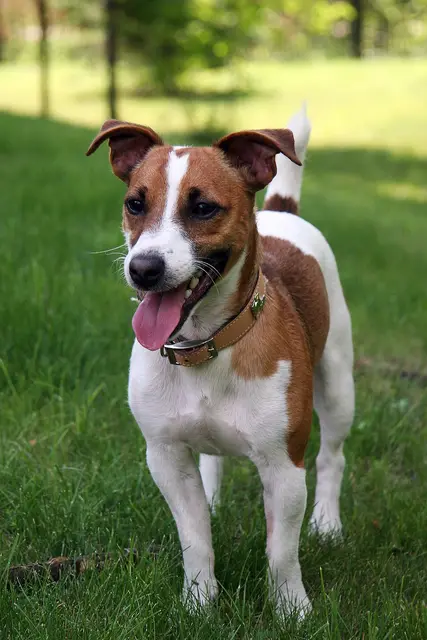
The Jack Russell Terrier is a small British terrier descended from fox-working dogs bred in North Devon in the early 19th century by the Reverend John 'Jack' Russell. It is mostly white with dark or tan markings and a smooth, rough or broken coat. Under the FCI standard it stands about 25 to 30 cm, and it is described as intelligent, athletic, fearless and very energetic.
Breed facts
| Origin | United Kingdom and Australia |
|---|---|
| Height at the withers | 25–30 cm |
| Weight | 5–6 kg |
| Life expectancy | — |
| Size group | Small |
| FCI | Group 3: Terriers · standard no. 345 |
| Breed standards | FCI, The Kennel Club (UK) |
From Wikidata (CC0) and the FCI breed list; — means Wikidata lists no figure.
Origin and history
In 1819, while at Oxford, Jack Russell bought a small white and tan terrier named Trump, which became the basis of his breeding program for terriers with the stamina and courage to bolt foxes from their earths. The dogs were bred mostly white so they would not be mistaken for the fox, and they were recognized as a distinct type by the 1850s.
After Russell's death in 1883, enthusiasts kept the old working type alive, and the Kennel Club recognized a related show breed as the Parson Russell Terrier. Breed clubs such as the Jack Russell Terrier Club of America, founded in 1976, opposed kennel club recognition to protect working ability, and the two breeds are now treated as distinct.
Appearance and coat
The breed is sturdy, compact and balanced, and must be small enough to pursue the red fox. Working club standards allow 25 to 38 cm at the withers, while the FCI standard requires the smaller size. The coat is more than half white with black, brown or tan markings and may be smooth, rough or broken. It has almond-shaped dark eyes, small V-shaped ears carried forward and a high-set tail.
Temperament
Because working ability is valued by breeders, Jack Russells are commonly described as extremely intelligent, athletic, fearless and vocal. Sources note they can be stubborn, and they may be aggressive toward other animals and people if not properly socialized, so obedience classes are often recommended.
Care and exercise
Jack Russells rely on a high level of exercise and stimulation. Their energy and drive suit sports such as flyball and agility. Working dogs are still used on ground-dwelling quarry, and in the US hunting dogs can be exposed to skunks.
Health
The breed is long-lived in UK studies: a 2024 study found 13.3 years and a 2022 study ranked it highest of the breeds studied. Conditions reported in the breed include primary lens luxation, patellar luxation, Legg-Calvé-Perthes disease, hereditary ataxia, deafness, mast cell tumors, a form of ichthyosis and steroid-responsive meningitis-arteritis. DNA tests exist for some inherited conditions.
General information, not veterinary advice.
FAQ
What is the difference between a Jack Russell and a Parson Russell Terrier?
They share an origin, but the Parson Russell is a show breed with a narrower height range, a longer head and a larger chest. The Jack Russell standard is broader and more work-based.
How big does a Jack Russell Terrier get?
The FCI standard calls for about 25 to 30 cm at the withers, while some working clubs allow 25 to 38 cm. It is a small terrier sized to follow foxes underground.
How long do Jack Russell Terriers live?
A 2024 UK study found a life expectancy of 13.3 years, above the average for purebred dogs.
Are Jack Russells good with other pets?
They have strong hunting instincts and may be aggressive toward other animals if not well socialized. Early socialization and training are commonly advised.