Dog breed · FCI 10
Borzoi
In short
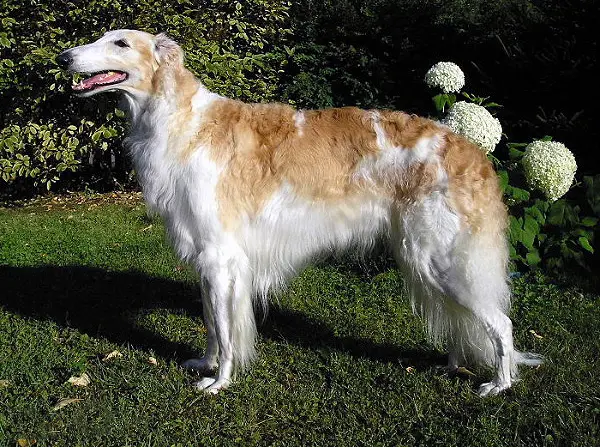
The Borzoi, or Russian Hunting Sighthound, is a large Russian sighthound formerly used to hunt wolves and known as the Russian Wolfhound until 1936. It has a uniquely long snout and a silky, flat or wavy coat, and is described as affectionate, athletic and calm.
Breed facts
| Origin | Russia |
|---|---|
| Height at the withers | 68–85 cm |
| Weight | 45 kg |
| Life expectancy | — |
| Size group | Giant |
| FCI | Group 10: Sighthounds · standard no. 193 |
| Breed standards | FCI |
From Wikidata (CC0) and the FCI breed list; — means Wikidata lists no figure.
Origin and history
The breed originated in sixteenth-century Russia from crosses of Saluki and European sighthounds with thick-coated Russian breeds. Its name comes from an archaic Russian word meaning swift. Borzois were popular with the Tsars before the 1917 revolution and for centuries could only be received as gifts from the Tsar. The FCI definitively accepted the breed in 1956.
Appearance and coat
Borzois are tall sighthounds that resemble breeds such as the Afghan Hound and Saluki, typically standing about 68–85 cm. The long top coat is silky and flat, often wavy or slightly curly, with a frill on the neck and feathering on the hindquarters and tail. The soft undercoat thickens in winter and is shed in hot weather. The breed comes in a variety of colours.
Temperament
The Borzoi is described as affectionate and athletic with a calm temperament. It is said to be a selective learner that quickly tires of repetitive tasks and can be hard to motivate, although with enough training it can do well in obedience and agility.
Care and exercise
Sources give little detail on the breed's exercise or grooming needs. As an athletic sighthound bred for hunting, it is generally expected to need room to run, and its seasonal undercoat is shed in warm weather.
Health
Conditions reported in the breed include heart murmurs and mitral or tricuspid regurgitation, which one American study found in a share of clinically healthy dogs, and gastric dilatation volvulus (bloat). Like other sighthounds, Borzois recover more slowly from anaesthesia. A 2024 UK study found an average life expectancy of 12 years.
General information, not veterinary advice.
FAQ
How big does a Borzoi get?
Borzois are large dogs, commonly listed at about 68–85 cm at the shoulder and around 45 kg.
Is the Borzoi the same as the Russian Wolfhound?
Yes. The breed was known as the Russian Wolfhound until 1936, reflecting its former use in wolf hunting.
How long do Borzois live?
A 2024 UK study found an average life expectancy of 12 years.
Is the Borzoi recognised by the FCI?
Yes. The FCI lists it as the Borzoi (Russian Hunting Sighthound), breed number 193 in Group 10, sighthounds.