Dog breed · FCI 10
Greyhound
In short
The Greyhound is an ancient sighthound bred to hunt by sight and speed, later used for coursing and racing; modern pedigree stock was registered in the United Kingdom. It stands about 68–76 cm, is slim and muscular, and is commonly described as gentle, sensitive and affectionate.
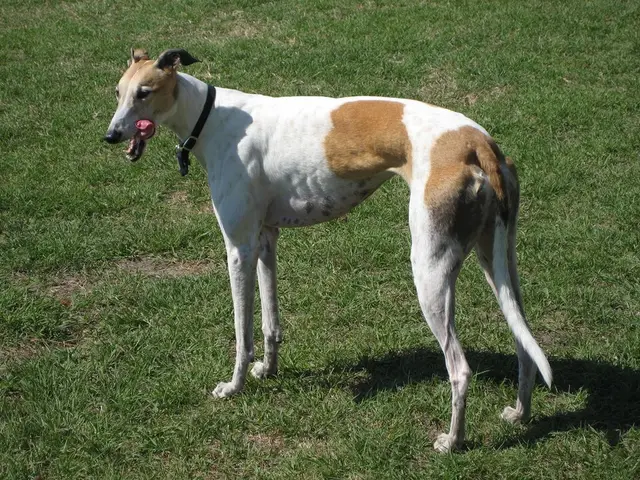
Breed facts
| Origin | United Kingdom |
|---|---|
| Height at the withers | 68–76 cm |
| Weight | 27–32 kg |
| Life expectancy | — |
| Size group | Giant |
| FCI | Group 10: Sighthounds · standard no. 158 |
| Breed standards | FCI |
From Wikidata (CC0) and the FCI breed list; — means Wikidata lists no figure.
Origin and history
Greyhound-like dogs appear in very old art and burials, and a genetic comparison of eighth- to ninth-century bones from a Czech fort found them almost identical to the modern breed. In the Middle Ages greyhounds were reserved for rulers and nobles. The name is thought to come from Old English grighund and is unrelated to the color grey.
All modern pedigree Greyhounds derive from stock recorded in British studbooks from the eighteenth century. They were used for hunting and hare coursing until modern track racing began in England in 1926; many retired racers are now rehomed as pets. A Greyhound won the first Crufts Best in Show in 1928.
Appearance and coat
The Greyhound is tall and muscular with a long tail, deep chest, flexible spine and the S-shaped outline of a sighthound; females are smaller than males. In racing it can exceed 69 km/h. The very short coat is easy to keep and comes in about 30 recognised color forms, including white, brindle, fawn, black, red and blue. It has no undercoat.
Temperament
Greyhounds are generally described as gentle, affectionate and sensitive, rarely barking and usually as friendly to strangers as to family; a 2008 study ranked them among the least aggressive breeds. They can do well with respectful children. Many follow owners from room to room, may startle if woken suddenly, and can chase small animals, including cats.
Care and exercise
Because of strong prey drive and often weak recall, rehoming groups recommend keeping Greyhounds leashed except in fully fenced areas, and some Australian states require leashes outdoors. With no undercoat and little body fat, they are sensitive to heat and cold and are kept indoors.
Health
A 2024 UK study found a life expectancy of 11.5 years. The breed has unusual blood chemistry, including high red cell and low platelet counts, metabolises some anesthetics differently, and is sensitive to certain insecticides. Conditions reported include delayed bleeding after surgery or trauma and corns on the paw pads.
General information, not veterinary advice.
FAQ
How fast can a Greyhound run?
Racing Greyhounds can reach peak speeds of at least 69 km/h, with typical winning speeds of about 58–61 km/h.
Are Greyhounds good with children?
They are commonly described as gentle and affectionate and can do well with children who are taught to treat the dog politely and respectfully.
Do Greyhounds need to stay on a leash?
Rehoming groups recommend it outside fully fenced areas, because many Greyhounds have a strong prey drive and little recall.