Dog breed · FCI 10
Irish Wolfhound
In short
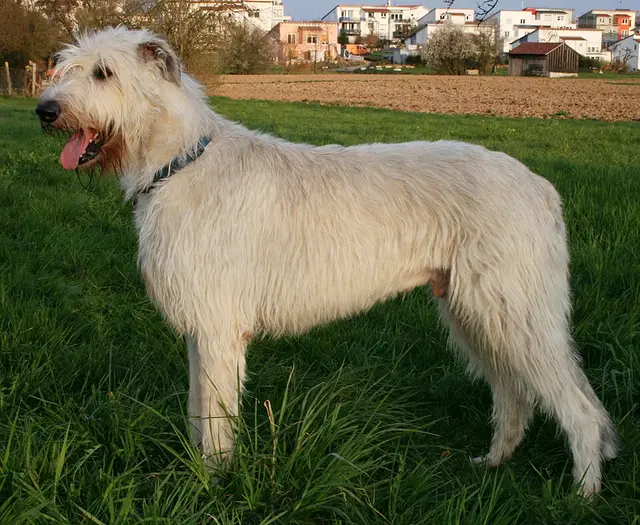
The Irish Wolfhound is a large sighthound from Ireland and one of the largest of all dog breeds, historically used for hunting wolves. It has a hard, rough coat and a long, muscular build, and is described as introverted, intelligent and reserved, with the motto gentle when stroked, fierce when provoked.
Breed facts
| Origin | Ireland |
|---|---|
| Height at the withers | 71–79 cm |
| Weight | 41–55 kg |
| Life expectancy | — |
| Size group | Giant |
| FCI | Group 10: Sighthounds · standard no. 160 |
| Breed standards | FCI |
From Wikidata (CC0) and the FCI breed list; — means Wikidata lists no figure.
Origin and history
Large hounds called cú appear in Irish laws and literature from the sixth century, and in 1571 Edmund Campion described Irish hounds for hunting wolves as bigger of bone than a colt. So many were exported to European royal houses that Oliver Cromwell restricted exports in 1652. After the last Irish wolf was killed in 1786, the dogs became rare. Captain George Augustus Graham revived the breed using the Scottish Deerhound and Great Dane, founded the Irish Wolfhound Club in 1885, and in 1902 the breed became mascot of the Irish Guards.
Appearance and coat
The FCI standard expects 81–86 cm at the withers, with minimums of 79 cm and 54.5 kg for dogs and 71 cm and 40.5 kg for bitches. The breed is more massive than the Scottish Deerhound but less so than the Great Dane, with a long muscular neck and the head carried high. The coat is hard and rough, wiry on the beard and over the eyes, in black, brindle, fawn, grey, red, white or Deerhound colours.
Temperament
Wolfhounds are described as individualistic, introverted, intelligent and reserved, and are valued for loyalty, affection and patience. They bond strongly with family and may become destructive or morose if left alone for long. Often friendly to strangers, they are considered unreliable watchdogs, though their size is a deterrent.
Care and exercise
Sources give little detail on daily exercise or grooming. As a sighthound that hunts by sight, the breed was developed for coursing, and its strong attachment to people means long periods alone are discouraged.
Health
Like many giant breeds, Irish Wolfhounds have a relatively short lifespan; a 2024 UK study found a life expectancy of 9.9 years. The most frequently reported conditions include dilated cardiomyopathy, bone cancer (osteosarcoma), gastric dilatation volvulus and osteochondrosis.
General information, not veterinary advice.
FAQ
How big does an Irish Wolfhound get?
Irish Wolfhounds are among the largest breeds, typically about 71–79 cm or more at the shoulder and roughly 41–55 kg.
How long do Irish Wolfhounds live?
The breed has a relatively short lifespan; a 2024 UK study found 9.9 years, and older estimates were lower.
Are Irish Wolfhounds good guard dogs?
They are considered unreliable watchdogs because they are often friendly to strangers, though their size can deter intruders.
Is the Irish Wolfhound recognised by the FCI?
Yes. The FCI lists it as breed number 160 in Group 10, sighthounds.