Dog breed · FCI 1
Bouvier des Flandres
In short
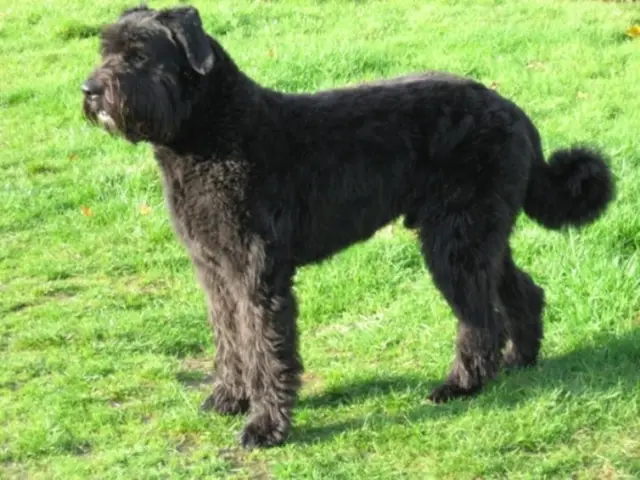
The Bouvier des Flandres is a herding dog from Flanders, Belgium, whose name means cow herder of Flanders. It was bred for farm work such as cattle droving, sheep herding and cart pulling, and today serves as a guard dog, police dog and pet. It is a large, rugged dog standing about 59 to 68 cm.
Breed facts
| Origin | Belgium |
|---|---|
| Height at the withers | 59–68 cm |
| Weight | 27–40 kg |
| Life expectancy | — |
| Size group | Large |
| FCI | Group 1: Sheepdogs and Cattledogs (except Swiss Cattledogs) · standard no. 191 |
| Breed standards | FCI |
From Wikidata (CC0) and the FCI breed list; — means Wikidata lists no figure.
Origin and history
Monks at the Ter Duinen monastery were among the earliest known breeders, crossing imported dogs with local farm dogs. The breed's farm role faded once trucks replaced cattle droving. Three variants competed until the early 20th century, and World War I nearly wiped out the breed; a trench dog named Nic is considered the founder of the early breed. A unified standard came in 1936, and after further setbacks in World War II the FCI standard was adopted in 1965.
Appearance and coat
The Bouvier is rough-coated and gives an impression of size and strength without clumsiness, with a heavy beard and moustache. Its thick double coat may be fawn, black, grey brindle or pepper and salt. Weight is listed at about 27 to 40 kg. Ear cropping has been illegal in Flanders since 2006.
Temperament
Bouviers are described as gentle, rational, even-tempered, loyal and protective, suiting them as family pets and guard dogs. They are naturally aloof with strangers and are said to coexist well with children and with dogs they are raised with. They are considered easy to train but may bore with too much repetition, and they mature slowly, at around two to three years.
Care and exercise
Shed hair tends to stay in the double coat and mat, so weekly brushing and combing is needed, with trimming every three to five weeks for show dogs. Early socialization and obedience training are recommended. Bouviers take part in agility, carting, obedience, tracking and herding.
Health
A 2024 UK study found a life expectancy of 11.3 years for the breed. The source text names no specific conditions; breed clubs generally recommend health screening of breeding stock and regular veterinary check-ups.
General information, not veterinary advice.
FAQ
Do Bouviers des Flandres shed?
They are sometimes called non-shedding but do lose hair; much of it is caught in the double coat, so weekly brushing is needed.
Are Bouviers good with children?
They are described as able to coexist well with children, though early socialization is recommended.
Is the Bouvier des Flandres recognised by the FCI?
Yes. It is FCI breed number 191 in Group 1, Sheepdogs and Cattle Dogs.