Dog breed · FCI 6
Dalmatian dog
In short
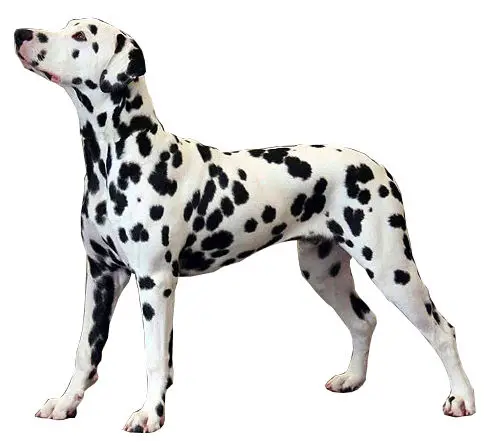
The Dalmatian is a spotted dog whose origins the FCI places in Croatia and the historical region of Dalmatia. A muscular dog of roughly 54–62 cm with great stamina, it was used for hunting, guarding and running beside horse-drawn carriages, including fire engines.
Breed facts
| Origin | Croatia |
|---|---|
| Height at the withers | 54–62 cm |
| Weight | — |
| Life expectancy | — |
| Size group | Large |
| FCI | Group 6: Scent hounds and related breeds · standard no. 153 |
| Breed standards | FCI |
From Wikidata (CC0) and the FCI breed list; — means Wikidata lists no figure.
Origin and history
The first known written reference dates from 1375, when the Bishop of Đakovo described a short-haired white hunting dog with black spots, Canis Dalmaticus. Early illustrations survive in Croatian churches, and English writers named it the Dalmatian or Coach Dog in the eighteenth century.
The breed was developed chiefly in England, where it was a Regency status symbol; a standard was published in 1882 and made official in 1890. Dalmatians served as hunting dogs, war dogs, ratters, circus performers and firehouse escorts. The 1956 novel The Hundred and One Dalmatians and the Disney films brought a surge in popularity, followed by many abandoned dogs.
Appearance and coat
The Dalmatian is muscular with excellent endurance; the AKC standard gives a height of 48–58 cm. Puppies are born white and spots, usually 2–6 cm and black or liver, develop until about 18 months. Blue, brindle, lemon, orange and tricolor occur occasionally. The short, dense coat sheds considerably all year, and its stiff hairs weave into fabric; the coat has little oil and little dog odor.
Temperament
The breed is described as intelligent, with a strong guarding instinct and strong hunting instincts, and it is noted for its compatibility with horses. Today it is kept mainly as a companion and show dog.
Care and exercise
Given its stamina and carriage-dog past, the Dalmatian is generally described as an active dog needing plenty of exercise. Weekly grooming with a hound mitt or currycomb can reduce, though not stop, shedding.
Health
Deafness in one or both ears is a known issue; one UK study found 18.4% of tested Dalmatians affected. The breed also carries hyperuricemia, which can lead to urinary stones and gout. Other conditions reported include autoimmune thyroiditis, atopic dermatitis and solar dermatosis. A 2024 UK study found a life expectancy of 13.2 years.
General information, not veterinary advice.
FAQ
Do Dalmatians shed a lot?
Yes. The standard short coat sheds considerably year-round, and the stiff hairs cling to fabric; weekly grooming reduces but does not prevent shedding.
Are Dalmatians often deaf?
Deafness is a recognised problem in the breed. Studies in several countries have found roughly 16–26% of tested dogs deaf in one or both ears.
How long do Dalmatians live?
A 2024 UK study found a life expectancy of 13.2 years, slightly above the average for purebred dogs.