Dog breed · FCI 6
Bloodhound
In short
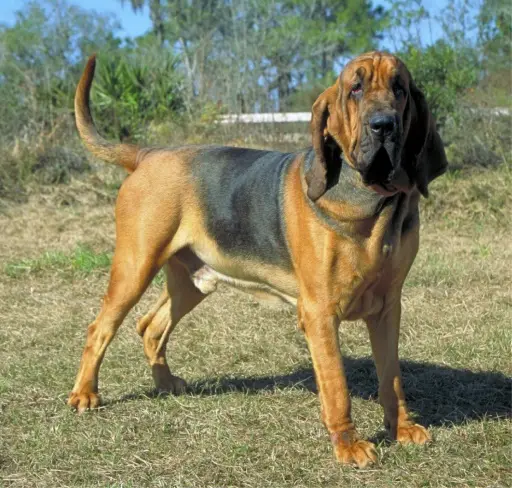
The Bloodhound is a large scent hound, known in French as the chien de Saint-Hubert, originally bred to hunt deer and boar and used since the Middle Ages to track people. It stands about 58–72 cm and weighs roughly 40–54 kg, and is reported to be gentle and tireless on a scent.
Breed facts
| Origin | Belgium |
|---|---|
| Height at the withers | 58–72 cm |
| Weight | 40–54 kg |
| Life expectancy | — |
| Size group | Giant |
| FCI | Group 6: Scent hounds and related breeds · standard no. 84 |
| Breed standards | FCI |
From Wikidata (CC0) and the FCI breed list; — means Wikidata lists no figure.
Origin and history
The breed is believed to descend from hounds kept at the Abbey of Saint-Hubert in Belgium, which sent pairs of black hounds to the French king each year from about 1200. In England, Bloodhounds are recorded from the fourteenth century, working as leashed limers to find game and as sleuth hounds trailing people, including Border reivers.
The original St Hubert strain died out in the nineteenth century, and French enthusiasts re-established it from imported English Bloodhounds, so the modern St Hubert and the Bloodhound are the same breed. Today Bloodhounds are used by police worldwide to track fugitives, missing people and lost pets.
Appearance and coat
The Bloodhound has an unusually large, heavy skeleton with very thick bones, long hanging ears and loose skin about the head; the AKC standard says judges prefer larger dogs. The hard, short coat is black and tan, liver and tan, or red, sometimes with white on the chest or feet.
Temperament
The breed is reported to be gentle, affectionate and even-tempered with people and is often described as an excellent family dog. Its strong tracking instinct can make it willful, somewhat difficult to obedience-train, and hard to handle on a leash once it has a scent.
Care and exercise
Sources advise inspecting the eyes, skin and ears frequently because problems there are common, and note that the thick coat makes the breed prone to overheating. Owners in Britain and Europe often take part in man-trailing working trials, which suit the breed's instincts.
Health
A 2024 UK study found a life expectancy of 9.3 years, well below the purebred average. Gastric dilatation volvulus (bloat) is the most common illness and the leading cause of death; a 2004 Kennel Club survey attributed 34% of deaths to it and 27% to cancer. Eye, skin and ear conditions are also reported at unusually high rates.
General information, not veterinary advice.
FAQ
How big does a Bloodhound get?
It stands about 58–72 cm at the withers and typically weighs around 40–54 kg, with larger dogs preferred in the show ring.
How long do Bloodhounds live?
A 2024 UK study found a life expectancy of 9.3 years, shorter than the average for purebred dogs.
Are Bloodhounds good family dogs?
They are described as gentle, affectionate and even-tempered with people, though their tracking drive can make them willful and hard to train.