Dog breed · FCI 2
Dobermann
In short
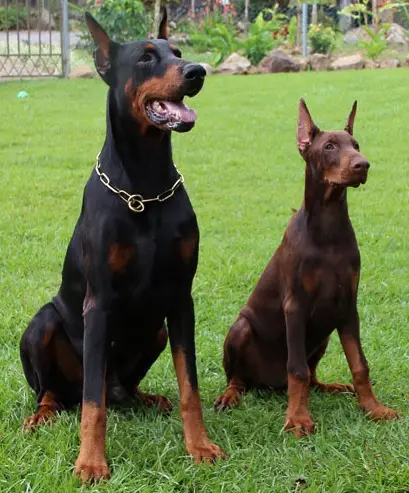
The Dobermann, called the Doberman Pinscher in the US and Canada, is a German working dog of pinscher type bred around 1890 in Thuringia by tax collector Louis Dobermann. Dogs stand about 68 to 72 cm and bitches 63 to 68 cm. It is described as intelligent, alert and tenaciously loyal, and is kept as a guard dog or companion.
Breed facts
| Origin | Germany |
|---|---|
| Height at the withers | 63–72 cm |
| Weight | 32–45 kg |
| Life expectancy | — |
| Size group | Giant |
| FCI | Group 2: Pinscher and Schnauzer, Molossoid and Swiss Mountain and Cattledogs · standard no. 143 |
| Breed standards | FCI |
From Wikidata (CC0) and the FCI breed list; — means Wikidata lists no figure.
Origin and history
Karl Friedrich Louis Dobermann ran a dog pound in Apolda, giving him access to many breeds, and set out to create a dog with stamina, strength and intelligence to protect him. The exact mix is uncertain; experts suggest the old German Shepherd, Rottweiler, German Pinscher, Beauceron and Weimaraner, with documented crosses to the Greyhound and Manchester Terrier.
After Dobermann's death in 1894 the breed was named Dobermann-pinscher in his honor, and Otto Goeller is credited with refining it. Germany and later Britain dropped the word pinscher. The US Marine Corps used Dobermans as war dogs in the Second World War.
Appearance and coat
The Dobermann is a medium-large, muscular dog with a long muzzle and, ideally, an even, graceful gait. Dogs usually weigh 40 to 45 kg and bitches 32 to 35 kg. The short coat comes in black, red, blue and fawn, most commonly black and rust. Ears were traditionally cropped and tails docked, but both are now illegal in many countries, and FCI shows require a natural tail and ears for dogs born after 2016.
Temperament
The breed is commonly described as intelligent, alert and loyal, and it ranks high in trainability studies, including fifth in Stanley Coren's obedience ranking. It is often stereotyped as ferocious, but a 2008 study found it relatively high in aggression toward strangers, extremely low toward owners and concluded it is not an aggressive breed overall. Some evidence suggests North American lines are calmer than European ones.
Care and exercise
As a working breed, registration in some countries depends on completing a working trial, which suggests it is generally thought to need regular activity and training. Sources give little specific detail on exercise or grooming; the short coat is generally considered easy to care for.
Health
A 2024 UK study found a life expectancy of 11.2 years. Dilated cardiomyopathy is a major problem in the breed and is often fatal. Other conditions reported in the breed include von Willebrand's disease, hypothyroidism, gastric dilatation volvulus, intervertebral disc disease, canine compulsive disorder, color dilution alopecia and several skin conditions. Hip dysplasia is reported less often than average.
General information, not veterinary advice.
FAQ
Is a Dobermann the same as a Doberman Pinscher?
Yes. Doberman Pinscher is the name used in the US and Canada, while most other countries, including Germany and Britain, use Dobermann.
How big does a Dobermann get?
Dogs stand about 68 to 72 cm and weigh 40 to 45 kg, and bitches stand 63 to 68 cm and weigh 32 to 35 kg.
How long do Dobermanns live?
A 2024 UK study found a life expectancy of 11.2 years, below the average for purebred dogs. Heart disease is a common cause of death.
Are Dobermanns aggressive?
They are often stereotyped that way, but one 2008 study found them very low in aggression toward owners and not an aggressive breed overall, though relatively high toward strangers.