Dog breed · FCI 2
Newfoundland dog
In short
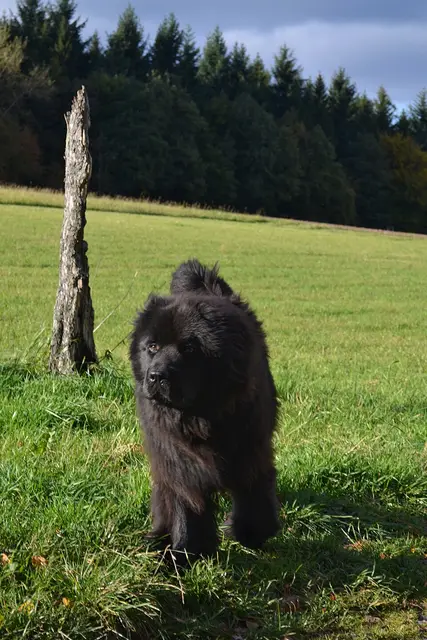
The Newfoundland is a giant working dog originally bred for fishermen in Newfoundland, now part of Canada. With its muscular build, thick double coat, webbed paws and swimming ability, it is known above all for water rescue and lifesaving.
Breed facts
| Origin | Canada |
|---|---|
| Height at the withers | 66–71 cm |
| Weight | 54–68 kg |
| Life expectancy | — |
| Size group | Giant |
| FCI | Group 2: Pinscher and Schnauzer, Molossoid and Swiss Mountain and Cattledogs · standard no. 50 |
| Breed standards | FCI |
From Wikidata (CC0) and the FCI breed list; — means Wikidata lists no figure.
Origin and history
The name Newfoundland dog is recorded as early as 1766. Visitors to the island described a large, heavy, longer-coated dog, the greater Newfoundland, and a smaller water dog, the St. John's water dog, which became the founding breed of modern retrievers; both pulled fishnets. Genomic analysis links the breed to the Irish Water Spaniel, Labrador Retriever and Curly-Coated Retriever. Newfoundlands helped found the Leonberger and were added to the St. Bernard. The dog Seaman accompanied the Lewis and Clark expedition.
Appearance and coat
Males normally weigh 65–80 kg and females 55–65 kg, placing the breed in the giant range, and they may stand up to 76 cm. The double coat has dense soft underfur and a coarse, oily, water-resistant outer coat. The AKC accepts black, brown, grey and white-and-black (Landseer); the Kennel Club and FCI allow black, brown and white-and-black.
Temperament
The source text gives little detail on temperament. The breed is renowned for courage in lifesaving, and breed club descriptions are the best guide to the character of individual dogs.
Care and exercise
Kennel clubs in the United States host Newfoundland water rescue demonstrations and classes. The breed's great size and fondness for mud and water are described as making it unsuitable as a pet for many households.
Health
Conditions reported in the breed include hip dysplasia, for which one large American study found the highest prevalence of any breed, elbow dysplasia, cranial cruciate ligament deficiency, dilated cardiomyopathy, gastric dilatation volvulus, hypothyroidism and several skin conditions. A 2024 UK study found a life expectancy of 11 years.
General information, not veterinary advice.
FAQ
How big does a Newfoundland get?
Newfoundlands are giant dogs, typically about 66–71 cm tall and 54–68 kg, with large males weighing more.
Are Newfoundlands good swimmers?
Yes. Their webbed paws, muscular build and water-resistant coat make them strong swimmers, and they are known for water rescue.
How long do Newfoundlands live?
A 2024 UK study found a life expectancy of 11 years for the breed.
Is the Newfoundland recognised by the FCI?
Yes. The FCI lists it as breed number 50 in Group 2.