Dog breed · FCI 7
Vizsla
In short
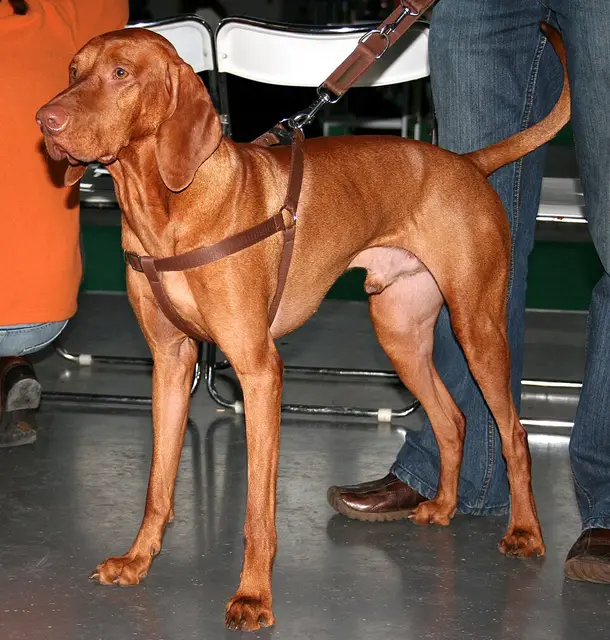
The Vizsla, or Hungarian Pointer, is a medium-sized hunting dog from Hungary used to track, point and retrieve game on land and in water. It is lean and muscular with a short, golden-rust coat, and is described as lively, gentle-mannered and affectionate, yet fearless with a protective instinct.
Breed facts
| Origin | Hungary |
|---|---|
| Height at the withers | 54–64 cm |
| Weight | — |
| Life expectancy | — |
| Size group | Large |
| FCI | Group 7: Pointing dogs · standard no. 57 |
| Breed standards | FCI |
From Wikidata (CC0) and the FCI breed list; — means Wikidata lists no figure.
Origin and history
The first written reference to the breed appears in the Illustrated Vienna Chronicle of 1357. The Vizsla survived the Turkish occupation and both world wars but came close to extinction more than once, including after World War II, when only about a dozen dogs of true type were found in Hungary. Dogs reached the United States after the war, and the American Kennel Club recognized the breed in 1960. The Vizsla contributed to the Weimaraner, Wirehaired Vizsla and German Shorthaired Pointer.
Appearance and coat
The Vizsla is robust but lightly built, with defined muscles. Males stand 58–69 cm and weigh 20–30 kg; females 52–61 cm and 18–25 kg. The coat is short, smooth, dense and close-lying with no woolly undercoat, in shades described as russet gold to dark sandy gold. The nose, eyes and nails blend with the coat color.
Temperament
Vizslas are described as trainable, intelligent and sensitive, and can be easily upset by harsh training. They enjoy attention and interaction and are said to get on well with children when properly socialized, but may become bored and destructive if left alone for long hours.
Care and exercise
The breed needs plenty of exercise and, when young, mental stimulation. Lacking an undercoat, it is not suited to being kept outside. The coat is simple to maintain, but Vizslas shed in all seasons, so regular brushing is advised, along with nail trimming.
Health
The Vizsla is considered robust. Conditions reported in the breed include epilepsy, cancers such as mast cell tumors, hemangiosarcoma and lymphoma, sebaceous adenitis, hypothyroidism, progressive retinal atrophy, von Willebrand disease and skin and food allergies; hip dysplasia is rare. A 2024 UK study found a life expectancy of 13.5 years.
General information, not veterinary advice.
FAQ
How big does a Vizsla get?
Vizslas typically stand about 52–69 cm and weigh 18–30 kg, with males larger than females.
Do Vizslas shed?
Yes. Although the coat is short and has no undercoat, Vizslas shed in all seasons and benefit from regular brushing.
How long do Vizslas live?
A 2024 UK study found a life expectancy of 13.5 years for the breed.
Is the Vizsla recognised by the FCI?
Yes. The FCI lists it as the Hungarian Short-haired Pointer, breed number 57 in Group 7, pointing dogs.