Dog breed · FCI 5
Korean Jindo
In short
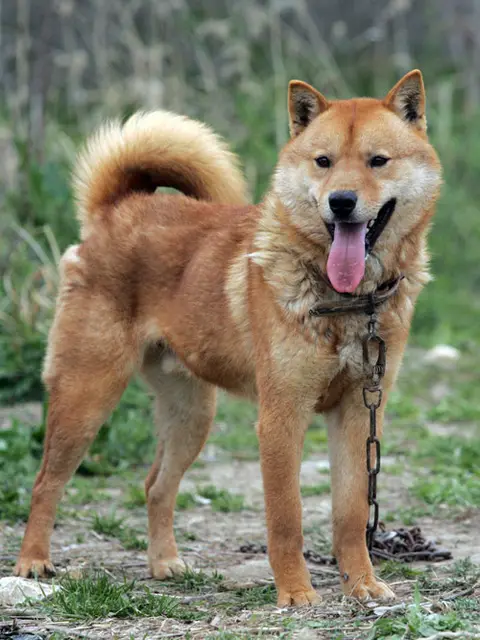
The Korean Jindo is a medium-sized spitz-type dog native to Jindo Island in South Korea, where it is protected as a Natural Monument. It stands about 45 to 55 cm tall, weighs roughly 15 to 23 kg, and is best known for loyalty to its owner and a strong hunting drive.
Breed facts
| Origin | South Korea |
|---|---|
| Height at the withers | 45–55 cm |
| Weight | 15–23 kg |
| Life expectancy | — |
| Size group | Medium |
| FCI | Group 5: Spitz and primitive types · standard no. 334 |
| Breed standards | FCI |
From Wikidata (CC0) and the FCI breed list; — means Wikidata lists no figure.
Origin and history
The Jindo was traditionally used on Jindo Island to hunt game such as water deer and wild boar. It was studied by Professor Tamezo Mori in 1937 and listed as a natural treasure in 1938, and in 1962 South Korea designated it its 53rd Natural Monument. Only dogs born on Jindo Island can be officially registered by the government, and pure island dogs are difficult to export.
Genetic studies show the Jindo shares ancestry with other East Asian dogs and some haplotypes with the Japanese Akita. The United Kennel Club recognised the breed in 1998 and the FCI in 2005; the American Kennel Club lists it in its Foundation Stock Service.
Appearance and coat
Jindos are double-coated spitz-type dogs with triangular, forward-leaning upright ears and a thick tail curled or carried sickle-style over the back. Owners distinguish a stockier Tonggol type and a more slender Hudu type. Recognised colours are white, fawn, wolf grey, black and tan, brindle and the rare solid black.
Temperament
The Jindo is widely described as loyal and gentle, often bonding with one owner, and instinctively wary of strangers. It has a strong prey drive and medium to high energy. Handlers have reported that its hunting instinct and attachment to a first owner make it less suited to search, rescue and police work.
Care and exercise
Sources say Jindos need proper living space, walks and frequent interaction with people or other dogs. Because they can jump high, fencing of at least 6 feet (about 1.8 m) is recommended for dogs kept in a yard.
Health
The source text does not describe specific health conditions in the Jindo. Breed clubs generally recommend health screening of breeding stock and regular veterinary check-ups.
General information, not veterinary advice.
FAQ
Are Jindo dogs loyal?
Loyalty is the trait the breed is best known for. A famous Jindo named Baekgu returned to her original owner on Jindo Island after being sold to a family about 300 km away.
How big does a Korean Jindo get?
It is a medium-sized dog, about 45 to 55 cm at the withers and roughly 15 to 23 kg, with males larger than females.
Is the Korean Jindo recognised by the FCI?
Yes. The FCI recognised it in 2005 and lists it as breed number 334 in Group 5, with South Korea as the country of origin.