Dog breed · FCI 4
Dachshund
In short
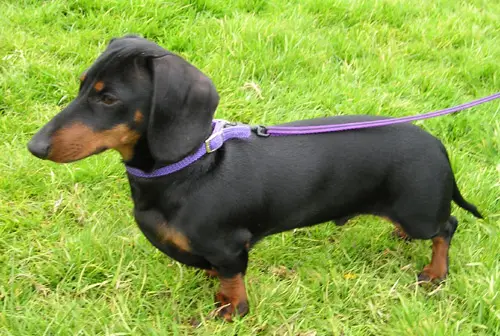
The Dachshund, also called the Dackel or Teckel, is a German breed of short-legged, long-bodied hound bred to scent, chase and flush out badgers and other burrow-dwelling animals. It comes in standard, miniature and, in FCI countries, rabbit sizes, with smooth, long-haired or wire-haired coats. The breed is usually described as clever, lively and courageous, but also stubborn.
Breed facts
| Origin | Germany |
|---|---|
| Height at the withers | 13–23 cm |
| Weight | — |
| Life expectancy | — |
| Size group | Small |
| FCI | Group 4: Dachshunds · standard no. 148 |
| Breed standards | FCI |
From Wikidata (CC0) and the FCI breed list; — means Wikidata lists no figure.
Origin and history
The name means 'badger dog' in German. The breed was created by German breeders from German, French and English hounds and terriers, and the first verifiable references date from books of the early 18th century, although its exact origins are disputed. They were also used on rabbits and foxes and to track wounded deer.
The smooth-haired variety is the oldest; the long-haired and wire-haired types developed from it, the wire-haired coming last in the late 19th century. The breed has long been seen as a symbol of Germany and was the first official Olympic mascot, Waldi, at the 1972 Munich Games.
Appearance and coat
A typical Dachshund is long-bodied and muscular with short legs, large paddle-shaped front paws suited to digging, a long snout and big, droopy ears. There are three coats: smooth, long-haired with a silky coat and feathering, and wire-haired, the most common type in Germany. Colors include red, cream, brown, tan-pointed combinations and wild boar, with patterns such as dapple, sable, brindle and piebald.
A standard Dachshund typically weighs 7.5 to 14.5 kg, while the miniature normally weighs less than 5.5 kg and the kaninchen (rabbit) size 3.5 to 5 kg.
Temperament
The American Kennel Club standard describes the Dachshund as clever, lively and courageous to the point of rashness. The breed is commonly described as stubborn and a challenge to train, with a strong urge to chase small animals. Some bark a lot, and they can be standoffish toward strangers.
Care and exercise
Because of the long spine, sources note that obesity, jumping, rough handling and intense exercise can raise the risk of back injury. Keeping the dog at a healthy weight is therefore often emphasized. The long-haired and wire-haired coats need more grooming than the smooth coat. Some owners take part in earthdog trials, which use the breed's digging and scenting instincts.
Health
The breed is prone to spinal problems, especially intervertebral disc disease (IVDD); one estimate is that about 20 to 25% of Dachshunds develop it, and screening programs exist for breeders. Other conditions reported in the breed include patellar luxation, osteogenesis imperfecta in wire-haired lines, epilepsy, hypothyroidism, several eye conditions, and vision and hearing problems in double dapples. A 2024 UK study found a life expectancy of 13.2 years for the breed.
General information, not veterinary advice.
FAQ
What does the name Dachshund mean?
Dachshund is German for 'badger dog', from Dachs (badger) and Hund (dog). In Germany the breed is usually called Dackel, and hunters often call it Teckel.
How long do Dachshunds live?
A 2024 UK study found a life expectancy of 13.2 years for the breed and about 14 years for the miniature. Other studies have reported somewhat different figures.
Why do Dachshunds have back problems?
Their very long spine and short rib cage make them prone to intervertebral disc disease. Obesity, jumping and rough handling can add strain on the back.
Is the Dachshund recognised by the FCI?
Yes. The FCI lists the Dachshund as breed number 148 and gives it its own group, Group 4. It also recognises the rabbit size, which clubs in the US and UK do not.