Dog breed · FCI 2
Shar Pei
In short
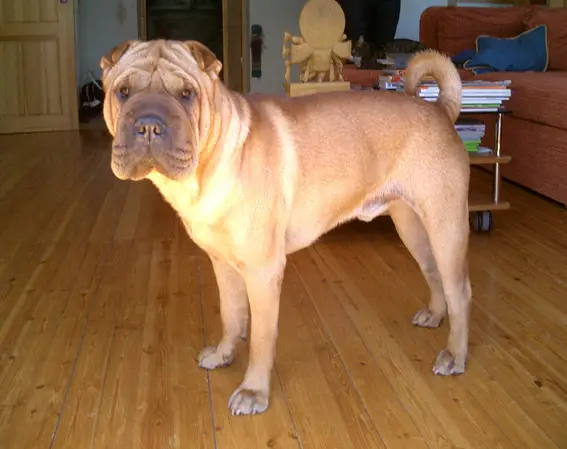
The Shar Pei is a medium-sized dog from southern China, traditionally kept as a property guardian and nearly extinct by the 1970s. It stands about 44–51 cm, has a short, very harsh coat, and is best known in the West for its deep wrinkles and blue-black tongue.
Breed facts
| Origin | China |
|---|---|
| Height at the withers | 44–51 cm |
| Weight | — |
| Life expectancy | — |
| Size group | Medium |
| FCI | Group 2: Pinscher and Schnauzer, Molossoid and Swiss Mountain and Cattledogs · standard no. 309 |
| Breed standards | FCI |
From Wikidata (CC0) and the FCI breed list; — means Wikidata lists no figure.
Origin and history
No records show the breed's origins, but it closely resembles effigies of unwrinkled guard dogs from Han dynasty southern China, and genetics identify it as a basal breed related to the Chow Chow. War and political turmoil left it close to extinction by the 1970s; in 1978 Guinness named it the world's rarest breed.
After a 1973 appeal by Hong Kong businessman Matgo Law, demand in the US surged, and some dogs were crossed with other breeds, producing the fleshier meat-mouth type. The AKC recognised the breed in 1992, and a traditional, less wrinkled bone-mouth type survives in small numbers in Hong Kong. The name means sand skin.
Appearance and coat
Adults typically stand 44–51 cm and weigh 16–20 kg. The short, very harsh coat can be any solid color except white, most often black, red, fawn or cream. The head is large, with a broad, padded muzzle, small triangular ears, deep-set eyes and a blue-black tongue; the tail curls over the back like a spitz. Western dogs are heavily wrinkled.
Temperament
Sources say little about temperament beyond the breed's traditional role as a guardian of property. Owners are generally advised to provide early socialization and consistent training, as with other guarding breeds.
Care and exercise
Sources give little specific guidance on exercise. Because the breed is prone to skin and ear problems, its skin folds and ears are commonly checked regularly, and the short coat needs little grooming.
Health
A 2024 UK study found a life expectancy of 10.6 years. Conditions reported in the breed include familial Shar Pei fever, which can lead to amyloidosis, entropion, atopic dermatitis, demodicosis, other skin and ear conditions, hypothyroidism, vitamin B12 deficiency, elbow dysplasia, primary open-angle glaucoma and hiatal hernia.
General information, not veterinary advice.
FAQ
How big does a Shar Pei get?
Adults typically stand 44–51 cm at the withers and weigh about 16–20 kg.
Why do Shar Peis have wrinkles?
Heavy wrinkling was favored in Western breeding from the 1970s onward; a traditional, less wrinkled type is still kept in Hong Kong.
How long do Shar Peis live?
A 2024 UK study found a life expectancy of 10.6 years, below the average for purebred dogs.