Dog breed · FCI 2
Tosa
In short
The Tosa, also called the Japanese Mastiff, is a rare large breed that originated in Tosa on the island of Shikoku, Japan, in the second half of the 19th century. Size varies widely, with Japanese-bred dogs often weighing about 36 to 61 kg and dogs bred elsewhere frequently heavier.
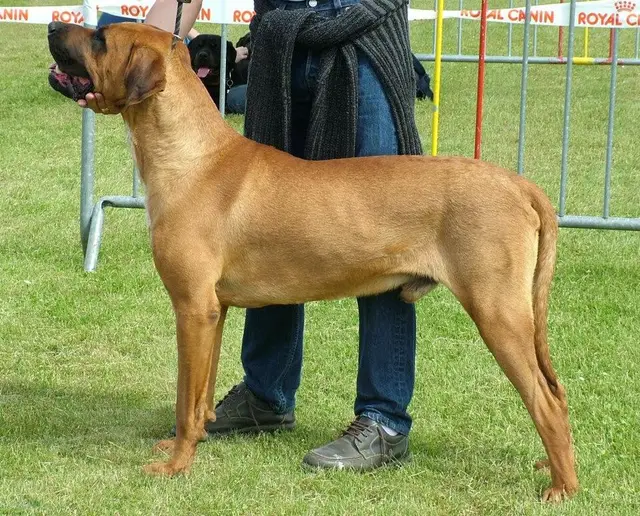
Breed facts
| Origin | Japan |
|---|---|
| Height at the withers | 55–60 cm |
| Weight | — |
| Life expectancy | — |
| Size group | Large |
| FCI | Group 2: Pinscher and Schnauzer, Molossoid and Swiss Mountain and Cattledogs · standard no. 260 |
| Breed standards | FCI, Japan Kennel Club |
From Wikidata (CC0) and the FCI breed list; — means Wikidata lists no figure.
Origin and history
The breed was developed in Tosa, Shikoku (present-day Kōchi), starting from the native Shikoku-Inu. From the 1870s these dogs were crossed with European breeds including the Old English Bulldog, English Mastiff, Saint Bernard, German Pointer, Great Dane and Bull Terrier to produce a larger, more powerful dog for dog-fighting competitions, and it became the only breed legally allowed in Japanese dog fighting. Breeding peaked between 1924 and 1933. The Tosa was introduced to South Korea in 1955.
Ownership of the Tosa is banned or restricted in a number of countries, including the United Kingdom under the Dangerous Dogs Act 1991.
Appearance and coat
Size varies considerably. Japanese-bred dogs generally weigh between 36 and 61 kg, while breeders outside Japan have focused on much larger dogs that can weigh 60 to 90 kg. The coat is short and smooth, usually red, brindle or fawn and occasionally dull black. In Japan the dogs are likened to sumo wrestlers and are sometimes shown in wrestling regalia.
Temperament
The source text gives little information on temperament. Owners usually rely on the breed standard and national kennel clubs for a description of character, and should check local laws, since the breed is legally restricted in several jurisdictions.
Care and exercise
Coat maintenance is described as usually minimal. Sources give little detail on exercise needs; as with any large, powerful dog, consistent handling and regular activity are generally recommended.
Health
The source text does not describe specific health conditions in the Tosa. Breed clubs generally recommend health screening of breeding stock and regular veterinary check-ups.
General information, not veterinary advice.
FAQ
Is the Tosa banned in some countries?
Yes. Ownership is banned or legally restricted in a number of countries, including the United Kingdom, Australia, Ireland, Denmark and New Zealand.
How big does a Tosa get?
Size varies a lot. Japanese-bred Tosas generally weigh about 36 to 61 kg, while dogs bred outside Japan are often considerably heavier.
Is the Tosa recognised by the FCI?
Yes. The FCI lists it as breed number 260 in Group 2, with Japan as the country of origin.