Nostalgia · Everyday life · Chinese childhood memory
What were Liangpiao (粮票)?
Also called: liang piao, grain coupons, food ration coupons, national grain coupons
In short
Liangpiao (粮票) were grain ration coupons used in China's planned economy. Urban residents received a fixed monthly grain allowance, and to buy rice, flour, steamed buns or even a restaurant meal you paid cash plus coupons for the weight of grain involved. National grain coupons were issued from 1955; after grain prices were freed, the State Council abolished grain and oil coupons from 1 April 1993, and cities stopped using them during 1993. Today they are collectibles with no purchasing value.
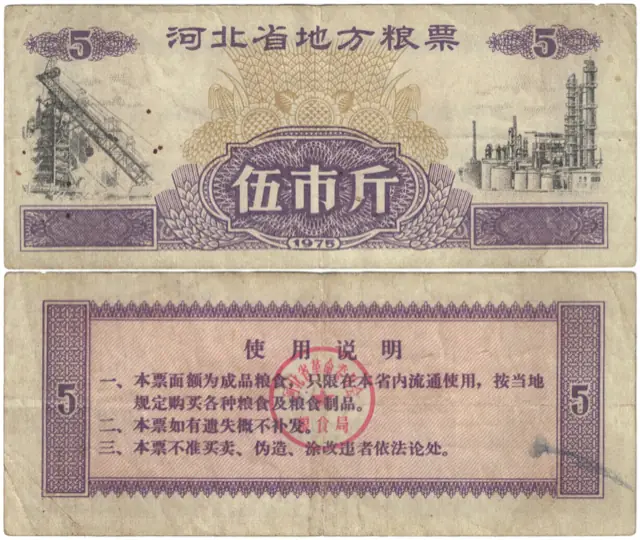
How the system worked
Planned grain supply began in October 1953, and in 1955 the Ministry of Food issued national grain coupons as rations were set per person. City households held a grain booklet and exchanged it for coupons at designated state grain shops. The monthly allowance depended on age, sex and type of work; one Beijing resident, recalling the era in a 2018 article on the CPPCC's news site, put it at 28 jin (14 kg) for adult women and 30 jin for men, more for heavy manual work.
- Four kinds by issuer: national, local, military and allocation coupons
- Local coupons worked only in the issuing province or city; travellers swapped them for national coupons with a letter from their work unit
- Denominations ran from half a liang (25 g) up to several jin
- Units changed from 16 liang to the jin, to 10 liang to the jin in 1959; kilogram coupons appeared from 1985
- Coupons for cooking oil, cloth and meat existed alongside them, varying by region
When they were abolished
| Date | What happened |
|---|---|
| Oct 1953 | Planned grain supply begins nationwide |
| 1 Nov 1953 | Beijing issues flour purchase certificates |
| 1955 | Ministry of Food issues national grain coupons |
| 1 Nov 1984 | Shenzhen ends grain booklets and coupons inside the special economic zone |
| 1 Apr 1992 | Guangdong is the first province to free grain prices and sales |
| 1993 | State Council notice abolishes grain and oil coupons from 1 April 1993 |
| 10 May 1993 | Beijing stops using grain coupons |
| 1994 | Coupons are essentially gone nationwide |
The coupons disappeared as grain output rose and grain prices were reformed: once grain could be bought freely at market prices, rationing was no longer needed. Exact dates differ by province, which is why 1993 is the usual short answer.
Are they worth anything now?
They cannot be used to buy grain or exchanged for money. They survive as collectibles and historical objects: there are many issues, years and regions, collectors who study them, and museums and archives that display them as everyday objects of the period. Many families still have a few left over in a drawer.
FAQ
When were grain coupons abolished in China?
In 1993. Guangdong freed grain prices on 1 April 1992; a State Council notice ended grain and oil coupons from 1 April 1993; Beijing stopped on 10 May 1993; by 1994 they were gone nationwide.
What was the difference between national and local coupons?
Local coupons only worked where they were issued. National coupons worked everywhere and were mainly for travel, obtained with a work-unit letter.
Can old grain coupons still be used?
No. They have no purchasing value today, only value as collectibles, which depends on the issue, year and condition.
Does it bring back memories?
Do you remember it?
Anonymous: no IP addresses are stored, and one network can add only a limited number of answers to a page each day.