Nostalgia · Snacks and drinks · Chinese childhood memory
What is Guodanpi (果丹皮)?
Also called: guo dan pi, hawthorn roll, hawthorn fruit leather, guozidan
In short
Guodanpi (果丹皮) is a Chinese fruit leather made mainly from hawthorn berries: the fruit is cooked into a purée, sweetened, spread thin, dried and rolled into small dark-red tubes that taste sweet and sharply sour. A Qing-dynasty poem already describes it under the old name guozidan. In the 1980s and 1990s it was one of the cheapest and most common snacks in northern Chinese corner shops, and it is still widely made and sold today.
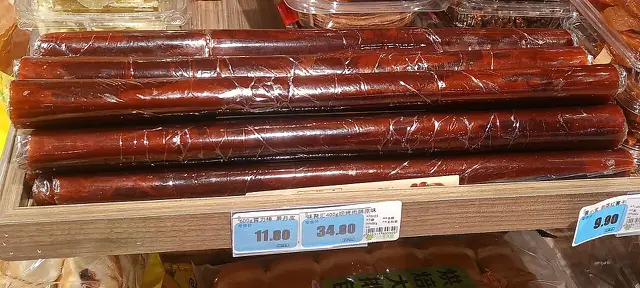
What it looks and tastes like
The classic form is a roll about as thick as a finger, wrapped in cellophane. Unroll it and you get a long, thin, deep-red strip of fruit. The texture is chewy, a bit like a fruit roll-up, with the tartness and slight graininess of hawthorn, a small red fruit related to the apple that is common in northern China.
It is made by stoning and cooking fresh hawthorns, blending them into a smooth paste, mixing in sugar, scraping it into a thin layer, drying it until it peels off in one sheet, then rolling and cutting it.
Where it came from
No one knows exactly when it was first made. According to the Beijing Evening News, the Qing court official Gao Shiqi, who accompanied the Kangxi Emperor on his campaign against Galdan, wrote a poem about guozidan and described it as hawthorn boiled into a pulp, thin as paper, even, able to be rolled and unrolled, dark red, sweet and sour, and good for thirst. So the snack existed at least by the late 1600s, and guozidan is regarded as the older name of guodanpi.
Hawthorn trees have grown around Beijing since the Tang and Song dynasties and were planted widely in the Ming and Qing, which is why northern China has a whole family of hawthorn snacks.
Guodanpi and other hawthorn snacks
| Snack | Looks like | Texture |
|---|---|---|
| Guodanpi | Thin red sheet rolled into a tube | Chewy, sweet and sour |
| Hawthorn flakes (山楂片) | Coin-sized discs sold in stacks | Dry, powdery, sweeter |
| Hawthorn cake (山楂糕, jingao) | Jelly-like block cut into cubes | Soft, tart |
| Tanghulu (冰糖葫芦) | Whole hawthorns on a stick in a sugar shell | Crunchy outside, sour inside |
Can you still get it?
Yes. Guodanpi never went away. Many Chinese food companies still make it, it sits on the dried-fruit shelf of ordinary supermarkets in China, and Beijing sells it as a local speciality. Besides the classic roll there are strips and small squares, and recipes differ in sweetness and fruit content.
Details people remember
- Unrolling the whole strip first and tearing it off bit by bit to make it last
- Rolling it back up tight and pretending it was a cigar
- The wrapper sticking to the fruit and having to peel it off carefully
- Adults saying hawthorn was good for the appetite and digestion
FAQ
What fruit is guodanpi made from?
Traditionally hawthorn berries with sugar. Some modern versions add other fruit; the ingredient list says which.
Is guodanpi the same as a fruit roll-up?
Similar idea, a dried fruit leather, but made from hawthorn, so it is noticeably sour, and it has been made in China for centuries.
What is the difference between guodanpi and hawthorn flakes?
Both are hawthorn. Guodanpi is a soft rolled sheet; hawthorn flakes are hard, dry, coin-sized discs.
Does it bring back memories?
Did you ever have it?
Anonymous: no IP addresses are stored, and one network can add only a limited number of answers to a page each day.